Live Sound Mixers 2026: 4 Essential Features for Seamless Performance
Advertisements
The evolution of live sound mixers by 2026 will prioritize digital integration, intuitive control, powerful processing, and adaptable I/O to ensure flawless audio delivery in diverse performance environments.
As the live music and event industry continues its rapid evolution, the demands placed on audio professionals are escalating. For seamless performance in any venue, understanding the critical advancements in live sound mixers is paramount for 2026 and beyond. This article delves into the four non-negotiable features that will define the next generation of mixing consoles, ensuring engineers can deliver pristine audio with unparalleled efficiency and flexibility.
Advertisements
The Rise of Advanced Digital Integration and Networking
The landscape of live sound has been irrevocably altered by digital technology, and by 2026, advanced digital integration and networking capabilities will be the bedrock of any high-performing live sound mixer. No longer a luxury, seamless connectivity across various platforms and devices is now an absolute necessity for intricate productions.
Modern venues and touring acts require mixers that can effortlessly communicate with a myriad of digital components, from wireless microphone systems and in-ear monitors to elaborate lighting rigs and video projection systems. This level of integration streamlines workflows, reduces setup times, and minimizes potential points of failure, which are all critical considerations in fast-paced live environments.
Seamless Workflow with Dante, AVB, and AES67
The ubiquity of audio-over-IP protocols like Dante, AVB, and AES67 means that a mixer’s native support for these standards is no longer optional. These technologies allow for the transmission of high-quality audio signals over standard Ethernet networks, dramatically simplifying cabling and expanding routing possibilities.
- Dante Integration: Provides flexible, high-channel-count audio networking for easy routing and device discovery.
- AVB (Audio Video Bridging): Offers guaranteed bandwidth and low latency for critical applications, perfect for synchronized audio and video.
- AES67 Compatibility: Ensures interoperability between different audio-over-IP systems, future-proofing your setup.
A mixer that embraces these networking standards empowers engineers to build sophisticated audio ecosystems, transcending the limitations of traditional analog cabling. This not only enhances sound quality but also provides unprecedented flexibility in system design and expansion.
Remote Control and System Management
The ability to control and manage a mixer remotely is another cornerstone of advanced digital integration. Engineers often need to adjust parameters from various vantage points within a venue, or even off-site during pre-production. Robust Wi-Fi connectivity and dedicated control applications are essential.
Imagine fine-tuning monitor mixes from the stage, or making critical adjustments from the front-of-house position without running back to the console. This level of remote access not only saves time but also allows for more precise and immediate adjustments, directly benefiting the performers and the audience experience. The integration extends to diagnostics and system health monitoring, providing real-time feedback on connected devices.
In essence, advanced digital integration and networking mean that the mixer acts as the central nervous system of a comprehensive live production system, capable of handling complex audio routing, remote control, and interoperability with other digital components, ensuring a truly seamless performance.
Intuitive User Interfaces and Ergonomic Design
While technological advancements are crucial, the human element remains central to live sound mixing. By 2026, live sound mixers must prioritize intuitive user interfaces and ergonomic design to allow engineers to react quickly and effectively, even under pressure. A powerful mixer is only as good as its usability, especially in dynamic live environments where split-second decisions are common.
The goal is to minimize cognitive load, allowing the engineer to focus on the artistic aspects of the mix rather than wrestling with complex menus or convoluted controls. This means a blend of physical tactile controls and highly responsive digital displays working in harmony.
Tactile Controls and Physical Feedback
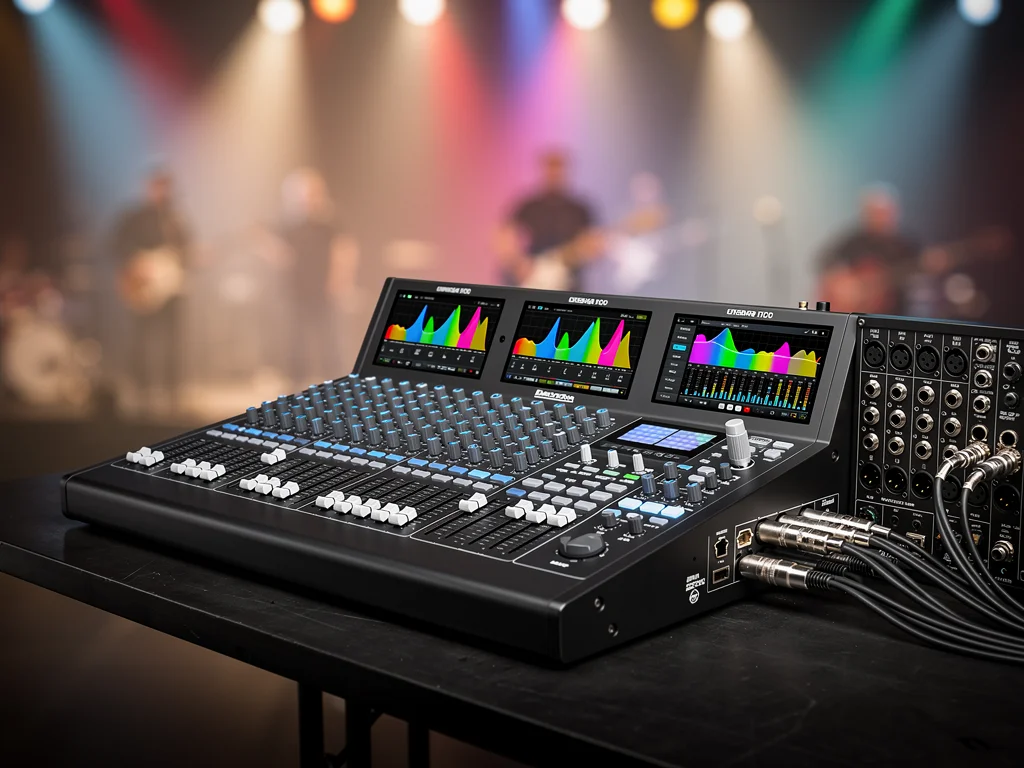
Despite the digital revolution, physical faders, knobs, and buttons remain indispensable. The tactile feedback provided by these controls allows engineers to make adjustments by feel, without constantly looking at a screen. High-quality motorized faders, assignable rotary encoders, and clearly labeled buttons contribute significantly to an efficient workflow.
- Motorized Faders: Provide visual and tactile feedback for scene recalls and automation, enhancing precision.
- Assignable Controls: Allow customization of workflow, putting frequently used parameters at the engineer’s fingertips.
- Robust Build Quality: Ensures durability and reliability, critical for touring and demanding live applications.
The physical layout should be logical and uncluttered, with sufficient spacing between controls to prevent accidental adjustments. The ability to quickly group channels, assign mute groups, and access custom layers are all facilitated by a well-thought-out physical interface.
High-Resolution Touchscreens and Visual Feedback
Complementing physical controls are high-resolution, multi-touch screens that offer detailed visual feedback. These screens should be bright, responsive, and provide clear graphical representations of EQs, dynamics, routing, and effects. The ability to pinch, zoom, and swipe through menus makes complex tasks more manageable.
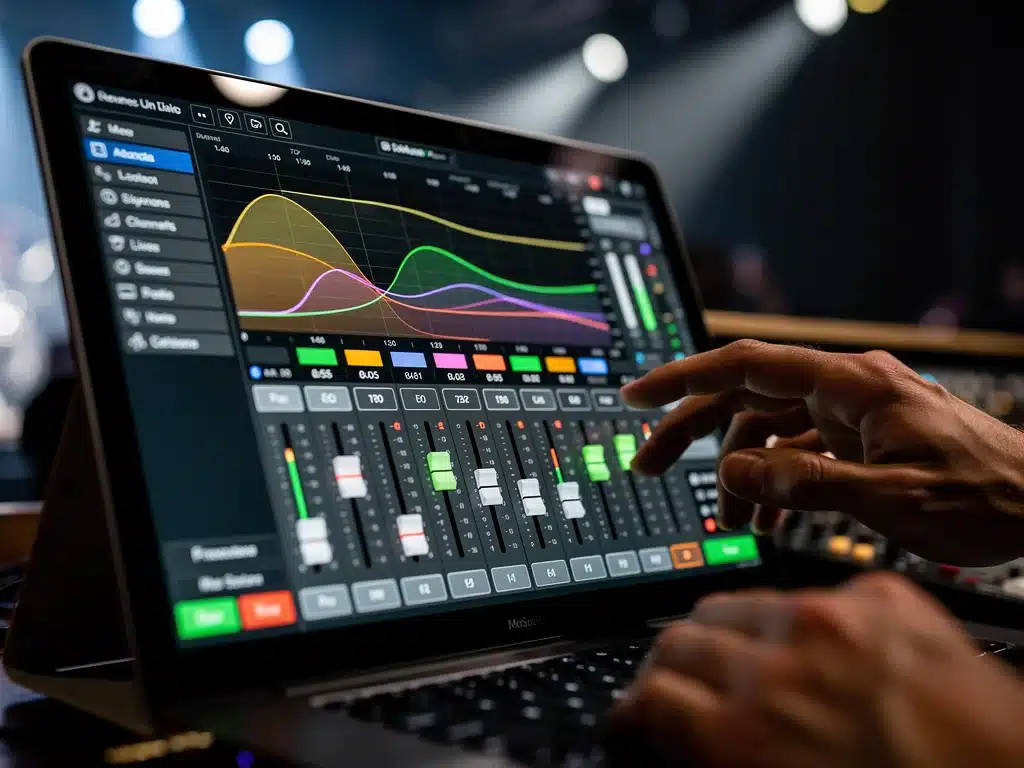
An intuitive graphical user interface (GUI) can significantly reduce the learning curve for new engineers and improve efficiency for seasoned professionals. Features like customizable layouts, color-coding, and comprehensive metering on screen allow for quick assessment of the mix status. The integration of touchscreens with physical controls provides a hybrid approach that leverages the best of both worlds: the immediacy of physical interaction with the depth of digital visualization.
Ultimately, a mixer with an intuitive user interface and ergonomic design allows engineers to operate with confidence and speed, translating technical prowess into a superior auditory experience for the audience, regardless of the venue’s complexities.
Robust Processing Power and Advanced DSP Capabilities
The demand for pristine audio quality and sophisticated sound manipulation continues to grow, making robust processing power and advanced Digital Signal Processing (DSP) capabilities non-negotiable for live sound mixers in 2026. A powerful DSP engine is the heart of a digital mixer, enabling it to handle complex audio tasks without compromise.
From intricate equalization and dynamic processing on every channel to high-quality effects and virtual soundchecks, the mixer must possess the horsepower to perform these operations in real-time with minimal latency. This is especially crucial for large-scale productions with numerous inputs and outputs.
High Channel Count and Extensive Processing Per Channel
Modern live productions often involve a substantial number of microphones and instruments, requiring mixers that can handle high channel counts. Beyond just the number of channels, each channel must be equipped with a comprehensive suite of processing tools, including parametric EQs, gates, compressors, and de-essers, all operating with exceptional fidelity.
- Parametric EQ: Offers precise frequency shaping for optimal sound clarity.
- Dynamic Processors: Compressors, gates, and limiters ensure consistent levels and control unwanted noise.
- Low Latency: Critical for live performance, ensuring no audible delay between input and output.
The ability to apply high-quality processing to every input and output without straining the system is a hallmark of a truly powerful mixer. This allows engineers to sculpt the sound with surgical precision, addressing acoustic challenges and enhancing the overall sonic experience.
Integrated Effects and Virtual Soundcheck Capabilities
On-board effects processing has evolved significantly, with mixers now offering studio-grade reverbs, delays, modulation effects, and more. These integrated effects not only save on external rack gear but also offer seamless control and recall within the mixer’s architecture. The quality and variety of these effects directly impact the creative potential of the engineer.
Furthermore, virtual soundcheck capabilities are becoming increasingly vital. This feature allows engineers to record multi-track audio directly from the mixer and play it back through the console for a soundcheck without the band being present. This saves invaluable time during setup and allows for meticulous fine-tuning of the mix in a controlled environment. The ability to loop sections, solo individual tracks, and experiment with different processing settings makes virtual soundcheck an indispensable tool for achieving a polished final mix.
The combination of extensive channel processing, high-quality integrated effects, and virtual soundcheck functionality ensures that a mixer is not just a routing device but a powerful audio workstation, capable of delivering exceptional sound in any live setting.
Scalable I/O and Flexible Routing Options
The diversity of live venues and performance scenarios demands that live sound mixers in 2026 offer highly scalable I/O (Input/Output) and incredibly flexible routing options. A mixer’s ability to adapt to different channel count requirements and signal flow complexities is paramount for its versatility and longevity.
From small club gigs requiring minimal inputs to large-scale festivals with hundreds of channels, the ideal mixer should be able to expand or contract its I/O capabilities to suit the specific needs of the production. This modularity not only saves costs but also simplifies logistics.
Modular Input/Output Expansion
The days of fixed input/output configurations are largely behind us. Modern mixers embrace modularity, allowing users to add or swap I/O cards to accommodate different connection types and channel counts. This might include additional analog XLR inputs, AES/EBU digital I/O, MADI, or specialized network cards for specific protocols.
- Card-Based Expansion: Easily add more analog inputs, digital outputs, or network protocols as needed.
- Remote Stage Boxes: Integrate seamlessly with distributed I/O units, reducing long cable runs and improving signal integrity.
- Future-Proofing: Modular design allows for upgrades to new I/O technologies as they emerge.
This flexibility ensures that an investment in a mixer remains relevant even as production requirements evolve. The ability to configure the mixer for a specific event, then reconfigure it for another, is a significant advantage in the dynamic world of live sound.
Matrix Routing and Custom Bus Configurations
Beyond simply connecting inputs to outputs, advanced routing capabilities are essential. A comprehensive matrix router allows engineers to send any input to any output or combination of outputs, providing unparalleled control over signal distribution. This is critical for managing monitor mixes, broadcast feeds, recording outputs, and front-of-house sends simultaneously.
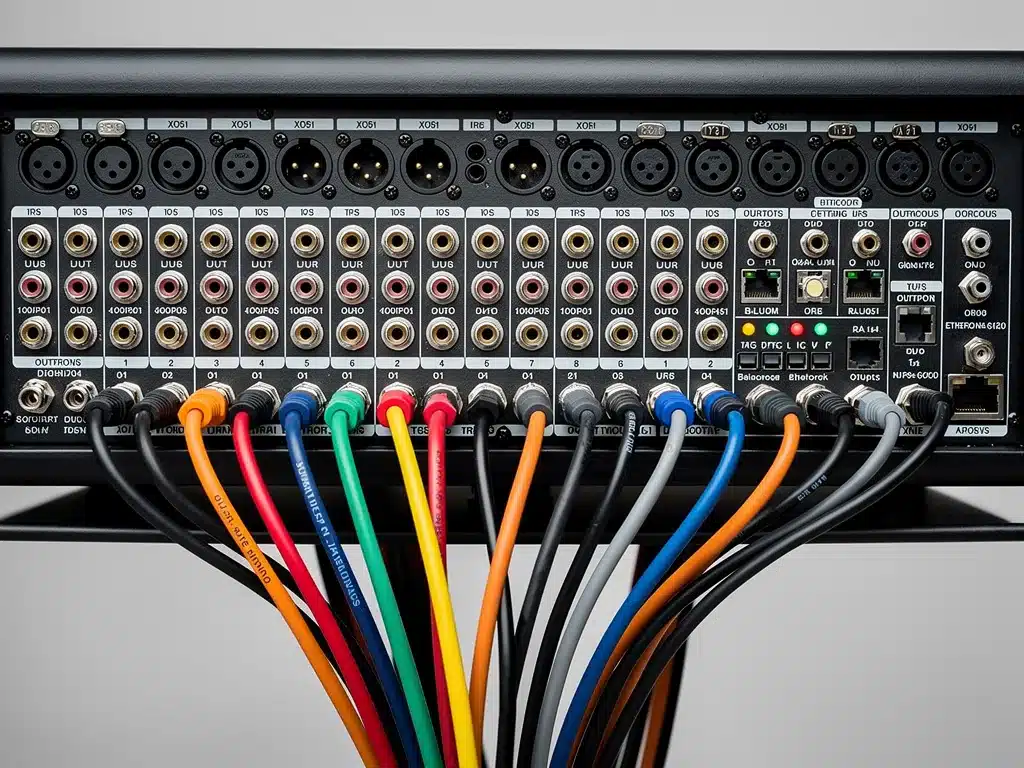
Customizable bus configurations also play a vital role. Engineers need the ability to create various auxiliary sends for effects, monitor mixes, and subgroups for processing multiple channels together. The ease with which these buses can be set up, routed, and managed directly impacts the efficiency of the mixing process. Features like delay compensation on outputs and flexible patching further enhance the mixer’s adaptability.
In essence, scalable I/O and flexible routing ensure that a live sound mixer can serve as the adaptable hub for any audio production, capable of handling diverse signal requirements and distributing audio precisely where it needs to go for a truly seamless performance.
Enhanced Reliability and Redundancy Features
In the high-stakes world of live events, failure is not an option. Therefore, by 2026, enhanced reliability and robust redundancy features will be absolutely critical for any professional live sound mixers. A system must be designed to withstand the rigors of touring and provide continuous operation, even in the face of unexpected technical glitches.
The consequences of a mixer failure during a live show can range from minor disruptions to catastrophic event cancellations. Engineers and production teams demand equipment that offers peace of mind, knowing that the audio will remain consistent and uninterrupted.
Redundant Power Supplies and Processing
One of the most fundamental aspects of reliability is redundant power. Professional mixers should feature dual, hot-swappable power supplies, allowing one to take over seamlessly if the other fails. This prevents any interruption to the audio signal. Furthermore, some high-end systems offer redundant processing engines, where a secondary DSP unit runs in parallel, ready to take over instantly if the primary unit encounters an issue.
- Dual Power Supplies: Ensures uninterrupted operation in case of power unit failure.
- Hot-Swappable Components: Allows for replacement of failed parts without shutting down the system.
- Redundant DSP: Provides a fail-safe for critical audio processing, maintaining sound integrity.
These features are not just about preventing total failure; they are about maintaining the integrity of the performance and the audience’s experience. The ability to continue a show without noticeable interruption, even with a component failure, is a testament to superior engineering.
Robust Hardware and Software Design
Beyond internal redundancies, the overall build quality of the mixer’s hardware is crucial. Chassis construction, component selection, and connector durability all contribute to its ability to withstand the demanding environments of live production. Similarly, the software and firmware must be incredibly stable, tested rigorously, and designed with error recovery in mind.
Regular software updates that address bugs and enhance stability are expected, as is a clear upgrade path for future features. The operating system should be resilient to crashes and offer quick boot-up times. Furthermore, the ability to easily backup and restore show files and settings is a vital redundancy feature, protecting against data loss. A mixer that combines robust physical construction with rock-solid software provides the ultimate confidence for live sound professionals, ensuring seamless performance night after night.
Ultimately, enhanced reliability and redundancy are about creating a failsafe system that minimizes risks and maximizes uptime. Investing in mixers with these features protects not only the performance but also the reputation of the audio professional and the production company.
Future-Proofing and Adaptability to Evolving Technologies
The rapid pace of technological change means that for live sound mixers in 2026, future-proofing and adaptability are not just desirable traits but essential requirements. An investment in a mixer should consider its ability to integrate with emerging technologies and remain relevant for years to come, protecting the financial and operational longevity of the equipment.
This goes beyond simple software updates; it encompasses a design philosophy that anticipates future needs and allows for expansion and integration with unforeseen innovations in audio and production technology. The goal is to avoid obsolescence as quickly as new standards and formats emerge.
Open Architecture and API Integration
Mixers with an open architecture and accessible APIs (Application Programming Interfaces) are inherently more future-proof. An open architecture allows third-party developers to create custom solutions, drivers, and control applications, extending the mixer’s functionality beyond its initial design. API integration facilitates seamless communication with other systems, such as show control software, lighting consoles, and even virtual reality environments.
- Third-Party Development: Access to a wider ecosystem of tools and applications.
- Custom Control: Create bespoke interfaces or integrate with existing control systems.
- Cross-Platform Compatibility: Enhanced ability to communicate with diverse hardware and software.
This level of openness ensures that as new technologies emerge, the mixer can be adapted to work with them, rather than becoming a standalone, isolated piece of equipment. It fosters innovation and provides a pathway for continuous improvement and expanded capabilities.
Scalable Hardware and Software Ecosystems
Beyond individual mixer features, the broader ecosystem offered by the manufacturer plays a significant role in future-proofing. This includes a commitment to developing new I/O cards, software modules, and complementary hardware that extends the mixer’s lifespan and capabilities. A strong ecosystem ensures that the mixer isn’t a dead-end product but rather a core component within a growing family of compatible tools.
Consider the ease of upgrading firmware, the availability of new processing algorithms, or the introduction of new control surfaces that can interface with existing mixer engines. A well-supported and evolving ecosystem provides confidence that the mixer will continue to meet the demands of future productions, offering new features and improved performance over time. This adaptability ensures that the mixer remains a high-value asset, delivering seamless performance as the industry continues to evolve.
Ultimately, a future-proofed mixer is one that can grow with the user’s needs and the industry’s advancements, protecting the investment and ensuring continued relevance in the fast-changing world of live sound production.
Security and Data Integrity in Live Sound Environments
As live sound mixers become increasingly integrated with digital networks and rely on complex software, the importance of security and data integrity cannot be overstated. By 2026, ensuring that sensitive show data, proprietary settings, and network communications are protected will be a fundamental feature for high-performance live sound mixers.
The potential for unauthorized access, data corruption, or even cyber-attacks on networked audio systems is a growing concern. A robust mixer must implement measures to safeguard both the operational integrity of the system and the intellectual property of the artists and engineers.
Secure Network Protocols and User Authentication
Networked audio systems, while offering immense flexibility, also present potential vulnerabilities. Mixers should employ secure network protocols to encrypt data transmission and prevent eavesdropping or tampering. Furthermore, sophisticated user authentication mechanisms are essential to control access to the mixer’s functions and settings.
- Encrypted Connections: Protect audio and control data transmitted over networks.
- Role-Based Access Control: Assign different permission levels to various users (e.g., FOH engineer, monitor engineer, guest engineer).
- Secure Remote Access: VPN or other secure methods for off-site control and monitoring.
Implementing strong password policies, multi-factor authentication, and logging of access attempts are crucial steps. This ensures that only authorized personnel can make changes to the mix or access sensitive system configurations, preventing accidental or malicious alterations.
Data Backup, Recovery, and Firmware Integrity
Beyond network security, the integrity of show data and the mixer’s firmware is paramount. Mixers should offer robust internal and external data backup options, allowing engineers to quickly save and restore entire show files, scenes, and libraries. This protects against accidental deletion, hardware failure, or software glitches.
A reliable recovery mechanism is also vital, enabling the mixer to revert to a stable state if a catastrophic error occurs. Furthermore, firmware integrity checks ensure that the operating system has not been compromised or corrupted, protecting against malware or unauthorized modifications. Regular, secure firmware updates provided by the manufacturer are key to patching vulnerabilities and maintaining system health. These measures collectively ensure that the mixer operates reliably and securely, protecting the production from unforeseen digital threats and data loss.
Ultimately, prioritizing security and data integrity in live sound mixers ensures not only the smooth operation of the audio system but also the protection of valuable production assets and the overall success of the event.
| Key Feature | Brief Description |
|---|---|
| Advanced Digital Integration | Seamless audio-over-IP networking (Dante, AVB) and comprehensive remote control capabilities. |
| Intuitive User Interfaces | Ergonomic design with tactile controls combined with high-resolution, responsive touchscreens. |
| Robust Processing Power | High channel count with extensive DSP per channel, integrated effects, and virtual soundcheck. |
| Scalable I/O & Redundancy | Modular input/output expansion, flexible routing, and critical redundant power/processing. |
Frequently Asked Questions About Live Sound Mixers in 2026
Advanced digital integration and robust networking capabilities, such as native Dante or AVB support, are arguably the most crucial. These features enable seamless connectivity with various digital systems, simplifying complex setups and enhancing overall workflow efficiency in diverse venues.
Intuitive user interfaces are extremely important. They combine tactile physical controls with responsive high-resolution touchscreens. This blend allows engineers to make quick, precise adjustments under pressure, focusing on the mix’s artistic aspects rather than struggling with complex controls, ensuring a smoother performance.
Robust processing power and advanced DSP capabilities are key because they enable high channel counts, extensive processing per channel (EQ, dynamics), and integrated studio-grade effects. This power also facilitates virtual soundchecks, allowing engineers to meticulously craft the mix with minimal latency and maximum fidelity.
Scalable I/O refers to the mixer’s ability to expand or contract its input/output capabilities through modular cards or remote stage boxes. This flexibility allows the mixer to adapt to various production sizes and connection types, making it versatile and future-proof for different venues and evolving demands.
Yes, absolutely. Enhanced reliability and redundancy, including dual power supplies and redundant processing engines, are crucial. They minimize the risk of failure during live performances, ensuring uninterrupted audio and protecting the integrity of the show. This provides peace of mind for engineers in high-pressure environments.
Conclusion
The future of live sound mixing, as we approach 2026, is defined by a convergence of advanced technology and user-centric design. The four essential features discussed—advanced digital integration, intuitive user interfaces, robust processing power, and scalable I/O with redundancy—collectively form the backbone of any high-performing live sound mixers. These elements are not merely upgrades but fundamental requirements for delivering seamless, high-quality audio in any venue, from intimate clubs to sprawling arenas. As the industry continues to innovate, investing in mixers that embody these characteristics will ensure that audio professionals are well-equipped to meet the evolving demands of live performance and consistently exceed audience expectations.