Navigating Online Vintage Marketplaces: 7 Tips for 2026
Advertisements
Navigating Online Vintage Marketplaces requires careful research, accurate measurements, close inspection of listings, realistic budgeting, and a clear understanding of seller and platform protections.
Online vintage shopping gives buyers access to clothing, accessories, jewelry, and collectibles that may be difficult to find through traditional retail.
The variety is appealing, but condition, authenticity, sizing, seller reliability, shipping costs, and return rules can vary significantly between listings.
Advertisements
These seven strategies can help U.S. shoppers evaluate vintage purchases more carefully while preserving the enjoyment of discovering unique pieces.
Understanding the Evolving Landscape of Online Vintage Marketplaces
Online marketplaces have expanded access to vintage fashion by connecting shoppers with individual sellers, consignment businesses, and specialist retailers around the world.
Different platforms offer different levels of authentication, buyer protection, returns, search tools, and seller oversight, making it important to understand how each service works.
Rather than assuming one marketplace is universally safer, shoppers should review the policies that apply to the specific item and transaction they are considering.
Why Online Vintage Shopping Continues to Attract Buyers
Vintage shopping can appeal to people looking for distinctive designs, discontinued products, older craftsmanship, or alternatives to buying newly manufactured clothing.
Digital platforms also make it easier to search by era, designer, material, size, category, or specific details without visiting multiple physical stores.
For shoppers interested in vintage shopping, the expanded selection creates more opportunities but also requires more careful evaluation.
Tip 1: Research and Vet Online Vintage Marketplaces Thoroughly
Before purchasing, review how the marketplace handles payments, returns, disputes, seller standards, and claims involving counterfeit or misrepresented items.
Some platforms actively participate in resolving disputes, while others place more responsibility on the buyer and seller to resolve problems directly.
Understanding these differences before paying is especially important for expensive designer goods or items that cannot easily be replaced.
Identifying Reputable Platforms
Check whether the marketplace clearly explains its seller rules, payment system, refund procedures, authentication services, and buyer-protection requirements.
Reviews can provide additional context, but they should be considered alongside official policies because individual experiences do not always represent every transaction.
For higher-value purchases, look specifically at whether the item itself qualifies for any authentication or protection program rather than assuming the entire platform is covered.
- Review seller guidelines and authenticity policies.
- Check payment, return, and dispute procedures.
- Confirm whether buyer protection applies to the specific item.
How Major Marketplaces Differ
The RealReal states that it physically authenticates every item it sells using specialists, internal data, and technology designed to identify inconsistencies.
Vestiaire Collective offers physical authentication and quality control through eligible authenticated-shipping options, while also noting that no authentication process is completely error-free.
eBay offers its Authenticity Guarantee only on eligible items in supported categories, so shoppers should look for the program’s checkmark on the specific listing.
Tip 2: Master Advanced Search Techniques and Filters
Large marketplaces can contain thousands of similar listings, making broad searches inefficient when you already know what you want.
Specific keywords, measurements, materials, eras, colors, and designer names can narrow results and make comparisons much easier.
Saved searches and alerts can also reduce the need to repeat the same search manually every day.
Using Specific Keywords and Brands
Searching for “1970s velvet maxi dress” will usually produce more focused results than searching only for “vintage dress.”
Designer names, fabric types, silhouettes, production eras, and condition terms can be combined to refine the search further.
Trying alternative terminology can also help because different sellers may describe the same style in different ways.
- Use specific eras, fabrics, designers, and silhouettes.
- Include condition terms when useful.
- Try alternate descriptions for the same style.
Use Saved Searches and Alerts
Many marketplaces allow shoppers to save searches or receive notifications when new listings match selected criteria.
This can be particularly useful for uncommon sizes, discontinued designer pieces, or highly specific accessories that appear infrequently.
Alerts should support patient comparison rather than encourage rushed purchases simply because a new listing has appeared.
Tip 3: Scrutinize Product Descriptions and Photos
Condition is one of the biggest variables in vintage shopping, so the listing should be examined beyond the headline image.
Look for information about stains, fading, repairs, missing hardware, alterations, odors, fabric damage, and signs of previous restoration.
When important details are missing, contact the seller before purchasing and keep the responses available in case a dispute later arises.
What to Look For in Listings
Detailed measurements are especially important because vintage sizing can differ substantially from modern sizing conventions.
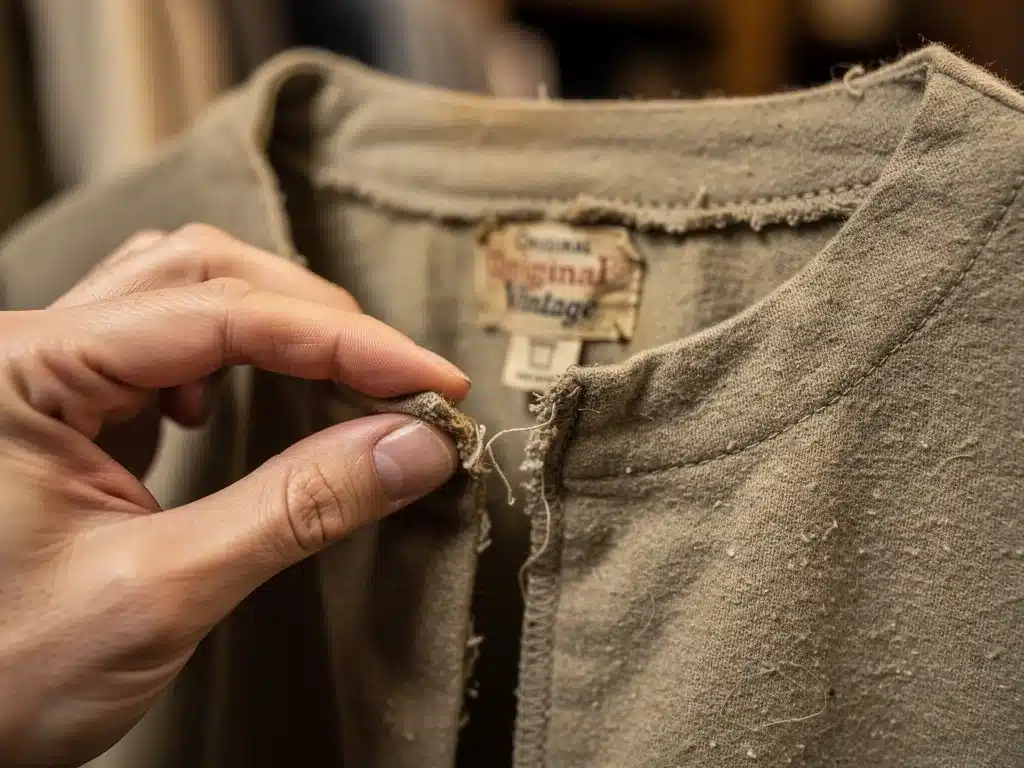
Photos should ideally show the front, back, interior, labels, closures, seams, hardware, and any visible damage mentioned in the description.
For expensive items, ask for close-up images of serial numbers, labels, stitching, engravings, or other identifying details when relevant.
- Compare measurements instead of relying only on tagged size.
- Look for clear descriptions of flaws and alterations.
- Request close-ups when important details are missing.
Do Not Rely on Photography Style Alone
Professional-looking photos can make a listing easier to evaluate, but they do not prove that the seller or item is trustworthy.
Likewise, simple home photographs do not automatically indicate a poor seller if they clearly document the actual product and its condition.
The more useful question is whether the images provide enough evidence to compare the description with the physical characteristics of the item.
Tip 4: Understand Seller Ratings and Return Policies
Seller ratings can provide useful information about communication, shipping, item accuracy, and previous customer experiences.
However, ratings should be combined with return policies and marketplace protections because even highly rated sellers can have individual transactions go wrong.
Always review the deadline for filing a complaint or requesting a return before purchasing, especially when the item is expensive.
Evaluating Seller Credibility
Look at the number of completed sales and read recent reviews rather than relying solely on the overall rating displayed beside the seller’s name.
Repeated complaints about inaccurate descriptions, counterfeit items, delayed shipping, or poor communication should receive particular attention.
A seller who responds clearly to reasonable questions and documents the item thoroughly gives the buyer more information for making a decision.
- Read recent reviews, not only the overall score.
- Check comments about condition and item accuracy.
- Keep important seller responses in writing.
Review Buyer Protection Before Paying
Marketplace protection policies vary, and some transactions may not qualify depending on payment method, item type, location, or timing.
The FTC advises consumers to review refund procedures, return deadlines, and marketplace assistance before completing an online purchase.
Buyers should also avoid moving payment outside the marketplace when doing so would eliminate protections offered by the platform.
Tip 5: Set a Realistic Budget and Stick to It
Vintage prices can vary considerably according to designer, rarity, condition, demand, provenance, and the seller’s own pricing strategy.
Setting a maximum price before shopping can help prevent an emotional decision when a rare or visually appealing piece appears.
The budget should include more than the listing price because shipping, sales tax, cleaning, repairs, and alterations can increase the true cost.
Budgeting Strategies for Vintage Finds
Research several comparable listings to understand the approximate range in which similar items are currently being offered.
Separate pieces you have actively searched for from items that simply caught your attention while browsing.
If a marketplace allows offers, a reasonable proposal may be appropriate, but sellers are not obligated to negotiate.
- Set a maximum price before purchasing.
- Include shipping, tax, cleaning, and alterations.
- Compare similar listings before making an offer.
A Low Price Can Carry Additional Risk
An unusually inexpensive luxury item can be attractive, but a price far below comparable listings deserves additional scrutiny.
For branded products, check whether authentication is available and whether the seller can provide sufficient photographs and documentation.
A bargain is useful only when the condition, authenticity, fit, and total cost still make sense after the item arrives.
Tip 6: Be Patient and Persistent in Your Search
Vintage inventories change constantly because individual pieces are often available only once and cannot simply be reordered from a manufacturer.
A patient strategy can provide more time to compare condition, price, measurements, and sellers rather than settling for the first acceptable option.
This is particularly useful for uncommon designers, exact sizes, rare prints, or pieces from a narrow production period.
Strategies for Patient Vintage Hunting
Saved searches make it easier to monitor specific items without repeatedly browsing entire categories from the beginning.
Checking several marketplaces can also reveal differences in pricing and inventory because sellers do not necessarily list on every platform.
Keeping a simple wish list can help distinguish a long-term target from an impulse purchase triggered by fear of missing out.
- Use saved searches and notifications.
- Compare inventory across multiple platforms.
- Maintain a list of specific items you actually want.
Use Communities as a Source of Knowledge
Vintage-focused communities can help shoppers learn about designers, manufacturing periods, label changes, construction techniques, and typical pricing.
Community opinions should still be verified because enthusiastic collectors can disagree about dating, authenticity, or valuation.
The most useful discussions are those that explain the evidence behind a conclusion rather than simply declaring an item authentic or rare.
Tip 7: Consider Sustainability and Ethical Practices
Buying secondhand can extend the useful life of existing clothing and reduce the need to manufacture a new item for that particular purchase.
However, the total environmental impact still depends on factors such as shipping distance, packaging, cleaning, repairs, and how frequently the item is actually used.
For that reason, vintage shopping is better described as potentially supporting more circular consumption rather than automatically being environmentally impact-free.
Ethical Considerations for Vintage Shopping
Shoppers who want to reduce shipping impacts can consider sellers located closer to them when the desired product is available locally.
Reusable or appropriately sized packaging can also reduce unnecessary material, although packaging choices are only one part of the total environmental footprint.
The most practical sustainability benefit often comes from purchasing pieces that will actually be worn and kept for a meaningful period.
- Consider nearby sellers when comparable options exist.
- Look for practical, appropriately sized packaging.
- Prioritize pieces you expect to use regularly.
Vintage Does Not Automatically Mean Ethical
A secondhand item may extend product life, but the transaction can still involve misleading descriptions, excessive shipping, counterfeit goods, or problematic business practices.
Shoppers should therefore evaluate the seller and transaction separately from the fact that the product itself is vintage.
Buying carefully and intentionally is more meaningful than assuming every secondhand purchase has the same environmental or ethical effect.
Authentication: What Buyers Should Know in 2026
Authentication services can reduce some risks when purchasing designer goods, but the scope and method vary between marketplaces.
Some services physically inspect eligible items before delivery, while others rely on seller information, digital screening, or optional authentication programs.
No authentication process should be interpreted as infallible, so buyers should still preserve order information and know how to report concerns.
Examples of Current Authentication Models
The RealReal states that every item it sells is physically examined and that its process combines human expertise with proprietary technology.
Vestiaire Collective offers physical Authentication & Quality Control for qualifying orders using authenticated shipping, while direct-shipping arrangements can work differently.
eBay’s Authenticity Guarantee physically inspects eligible items in supported categories before they are delivered to the buyer.
How to Pay More Safely
Payment method can influence what options are available if an item never arrives or differs materially from its description.
The FTC recommends safer payment methods such as credit cards or protected payment systems rather than methods that are difficult to reverse.
Transactions completed outside a marketplace may also lose platform protections, so buyers should understand the consequences before agreeing to alternative payment arrangements.
Keep Records of the Transaction
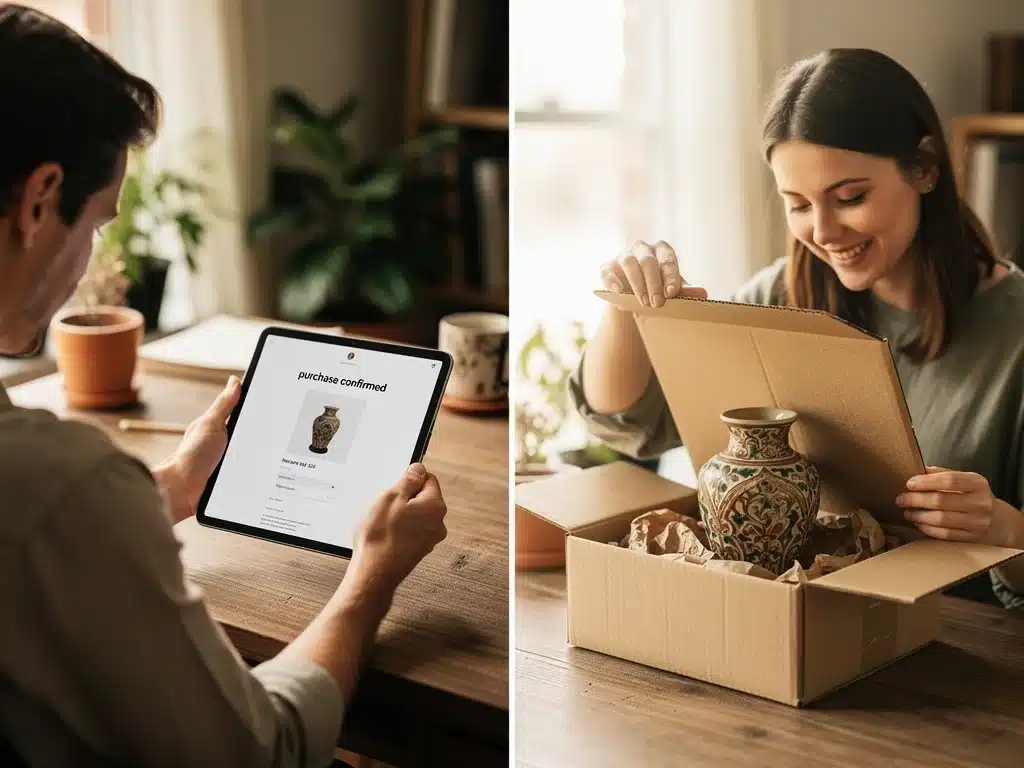
Save the original listing, photos, item description, seller messages, order confirmation, and any tracking information until the transaction is fully resolved.
If the item arrives with an undisclosed issue, photograph it promptly and compare the problem with the original description.
Documentation can make it easier to communicate with the seller, marketplace, or payment provider if a dispute becomes necessary.
What to Check Before Clicking Buy
Before checkout, confirm the item’s measurements, condition, material, shipping cost, return policy, seller history, and any authentication eligibility.
For expensive purchases, consider whether you would still be comfortable with the transaction if the item requires a return or formal dispute.
A short final review can prevent problems caused by excitement, limited-time pressure, or assumptions about policies that do not actually apply.
A Practical Final Checklist
Compare the measurements with a similar garment you already own rather than relying only on the labeled size.
Review every available photo and make sure any known flaws are reflected in the price you are willing to pay.
Finally, confirm the total cost and understand exactly which protections remain available after the payment is completed.
- Measurements checked.
- Condition reviewed.
- Seller history examined.
- Return and dispute policies understood.
- Total cost confirmed.
Looking Ahead
The online vintage market will continue changing as marketplaces update authentication services, search tools, payment systems, and buyer-protection policies.
Shoppers who stay informed about those rules will be better prepared than buyers who rely on assumptions based on a platform’s reputation alone.
The core strategy remains simple: research carefully, compare listings, document the transaction, and buy pieces that genuinely fit your needs and budget.
Enjoy the Search Without Rushing It
Part of the appeal of vintage fashion is discovering pieces that are no longer available through ordinary retail channels.
A patient approach gives you time to learn about eras, designers, materials, and construction while reducing pressure to purchase every interesting listing.
Whether searching for clothing, accessories, or inspiration from online vintage fashion, thoughtful buying can make the process more rewarding.
Explore Vintage Sellers Carefully
Specialist retailers and independent sites can offer distinctive inventory that differs from large multi-seller marketplaces.
When exploring online vintage stores, review payment, shipping, return, and contact information before purchasing.
Applying the same evaluation standards across large and small sellers helps keep the focus on the item, the transaction terms, and the evidence available.
| Key Tip | Benefit for Shoppers |
|---|---|
| Vet Marketplaces | Helps clarify authentication, payment, return, and dispute protections. |
| Advanced Search | Makes it easier to locate specific eras, styles, and sizes. |
| Scrutinize Listings | Reduces uncertainty about condition, measurements, and details. |
| Understand Policies | Helps buyers know what options exist when a transaction goes wrong. |
Frequently Asked Questions About Online Vintage Marketplaces