Vintage Fashion as Investment: 10-Year Designer Appreciation
Advertisements
Vintage fashion can preserve or increase value in selected cases, but performance varies sharply by brand, model, condition, rarity, provenance, fees, and market timing.
Data from luxury resale platforms and auction houses show strong 10-year gains for some Hermès, Chanel, and collectible Louis Vuitton pieces, but these results should not be treated as guaranteed investment returns.
Vintage Fashion is increasingly discussed as luxury resale becomes larger, more transparent, and easier to access through specialist marketplaces and auction houses.
Advertisements
The strongest evidence does not show that every vintage designer item appreciates. Instead, it shows that a relatively small group of highly recognizable handbags, rare editions, historically important pieces, and exceptionally preserved objects can command materially higher prices over time.
For buyers interested in vintage fashion investment, the key is to distinguish between collectible value and conventional financial investing, because fashion assets are less liquid, more expensive to authenticate and sell, and far more dependent on condition and changing demand.
The Rise of Luxury Resale in 2026
The secondhand luxury market has become significantly more structured over the past decade, supported by specialist resale platforms, authentication services, auction houses, and larger pools of international buyers.
The RealReal reported approximately $2.1 billion in gross merchandise value for 2025 and says more than 50 million items have been sold through its platform since launch, illustrating the scale now reached by authenticated luxury resale.
ThredUp’s 2026 resale research also projects continued expansion of the broader global secondhand apparel market, although growth of the overall resale sector should not be confused with price appreciation of every individual vintage piece.
Resale Growth Does Not Guarantee Appreciation
A larger resale market can improve visibility, price discovery, and access to buyers, but it does not guarantee that a specific handbag, garment, or accessory will increase in value.
Some products depreciate rapidly after purchase, while others retain a high percentage of retail price and a much smaller group can eventually sell above original retail.
The investment case therefore depends on the individual object rather than simply on the fact that it is vintage or carries a luxury label.
What a 10-Year Appreciation Study Should Actually Measure
Tracking value over ten years requires consistent definitions because retail prices, resale prices, auction prices, and value-retention percentages measure different things.
A retail price increase shows what the brand charges for a new item, while resale appreciation reflects what buyers are willing to pay for pre-owned examples in the secondary market.
Auction records are different again because rare provenance, unusual materials, celebrity associations, or exceptional scarcity can produce prices that are not representative of an ordinary example.
Nominal Price Growth Is Not the Same as Investment Return
If a handbag rises from $10,000 to $19,000 over ten years, the 90% nominal increase does not automatically represent a 90% investor profit.
A seller may face marketplace commissions, auction premiums, authentication fees, shipping, insurance, taxes, restoration costs, currency effects, and years of storage or maintenance.
Any realistic assessment of vintage fashion as an investment should therefore distinguish gross market appreciation from the seller’s net return.
Hermès Birkin: One of the Strongest Documented 10-Year Cases
The clearest recent 10-year dataset comes from Rebag’s 2025 Clair Report, which analyzed Birkin pricing from 2015 through 2025.
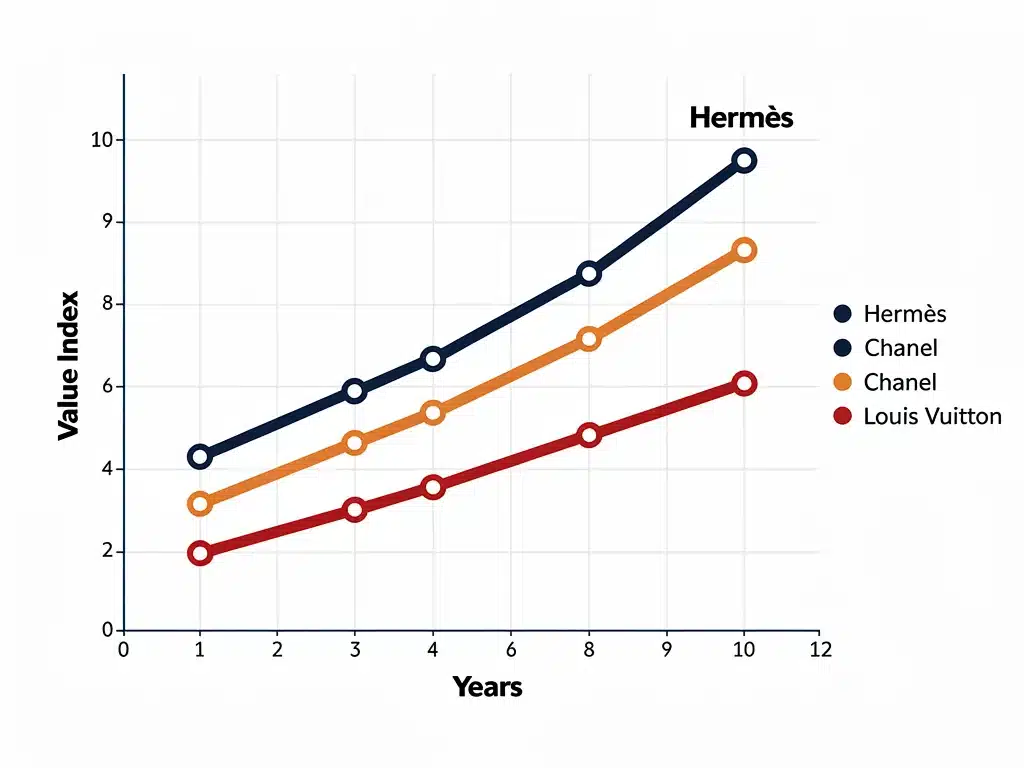
According to that report, average Hermès Birkin retail prices increased approximately 43% during the decade, while average resale prices rose about 92%.
That is a strong historical result for one highly specific luxury product, but it is not equivalent to a guaranteed annual return for every Birkin, every Hermès bag, or future purchases.
Why the 12%–15% Annual Claim Is Misleading
The original article stated that certain Birkin and Kelly bags had appreciated by an average of 12% to 15% annually over ten years.
The verified Rebag data do not support using that figure as a general annual return. A 92% cumulative increase over ten years is materially different from compounding at 12% to 15% every year.
Annualized performance also depends on the exact purchase price, resale price, model, condition, transaction date, and selling costs, so a single percentage should not be presented as a universal Birkin return.
Hermès Retail Prices Also Continued Rising in 2026
Sotheby’s reported that the U.S. retail price of a Birkin 30 in Togo leather rose from approximately $10,900 in 2016 to $14,900 in 2026.
That represents substantial nominal retail price growth over the decade, although retail inflation by the manufacturer should not be confused with resale profit for an owner.
Sotheby’s also reported that the average selling price of a classic Birkin 30 in Togo leather reached approximately $22,300 in 2025 on its marketplace, demonstrating the premium that strong secondary-market demand can create for desirable examples.
Not Every Birkin Commands the Same Premium
Size, leather, color, hardware, age, condition, rarity, and accessories can materially influence the market value of a Birkin.
Rare exotic materials or limited combinations can command very different prices from standard Togo leather examples, while heavily worn bags may sell at significant discounts.
This is why headline auction records should not be used to estimate the value of an ordinary bag without a model-specific comparison.
The Jane Birkin Prototype Shows the Importance of Provenance
In 2025, the original Birkin created for Jane Birkin sold at Sotheby’s for more than $10 million, producing extraordinary international attention.
That result was driven by unique provenance and historical significance rather than normal resale dynamics for commercially produced Birkin bags.
It demonstrates how provenance can radically increase collectible value, but it should be treated as an exceptional auction event rather than evidence of what a typical Hermès owner can expect.
Celebrity Ownership Can Change the Valuation Framework
An object directly associated with a historically important person can become a cultural artifact rather than simply a luxury accessory.
Collectors may then value documented ownership, public history, exhibitions, photographs, and archival relevance as much as the physical object itself.
For this reason, celebrity provenance should be analyzed separately from normal brand-driven resale appreciation.
Chanel Classic Flap: Strong Retail Growth and Resale Demand
Chanel’s Classic Flap provides another useful example of long-term luxury price growth, although available data are stronger for retail pricing than for a universal 10-year resale return.
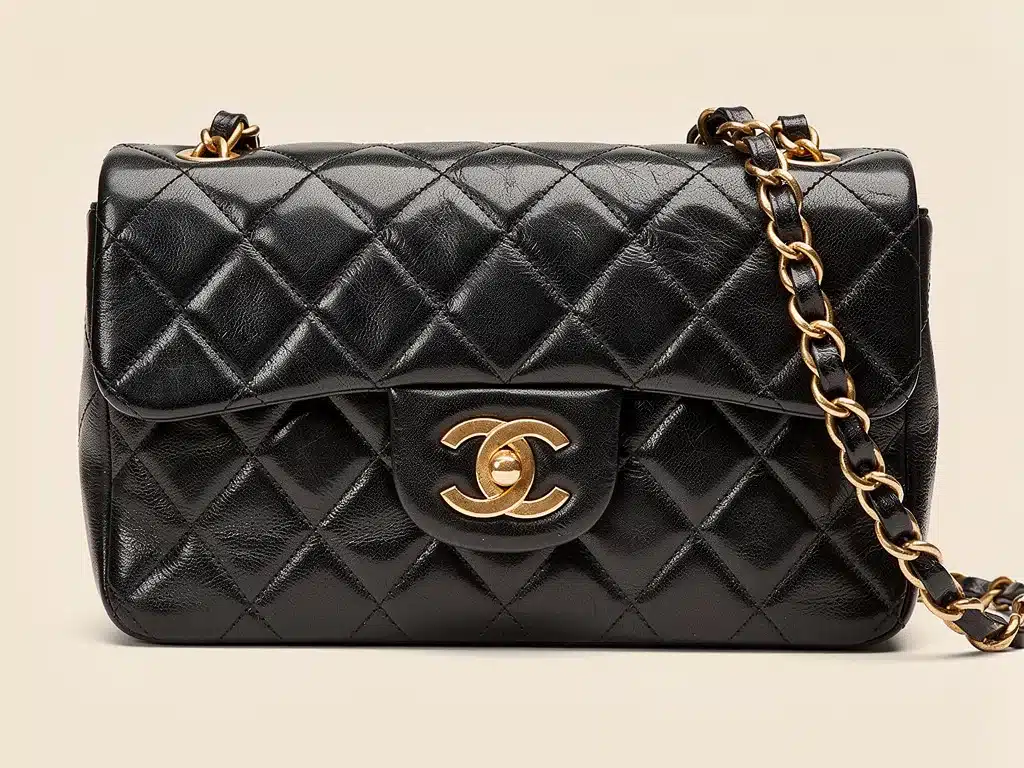
Sotheby’s reports that the Medium Classic Flap rose from approximately $4,900 in 2016 to more than $11,000 by 2025, meaning its retail price more than doubled over that period.
In 2026, Sotheby’s lists a Medium Classic Flap retail price of approximately $11,700, while rare, pristine, or limited versions can sell for significantly more on the secondary market.
Retail Appreciation Does Not Mean Every Vintage Chanel Doubled
The increase in Chanel boutique pricing supports higher resale reference points, but the value of an older bag still depends on its specific production period and condition.
Sotheby’s notes that vintage Medium Classic Flaps from the 1990s can sell for more than $7,000, while particularly rare materials and limited editions can command much higher prices.
Those figures show strong demand but do not establish that every person who bought a Chanel bag ten years ago would currently realize a profit after transaction costs.
Rare Chanel Pieces Can Behave Very Differently
Limited runway pieces occupy a separate collectible category from standard Classic Flaps.
Christie’s set a world auction record for a Chanel handbag in December 2025 when a rare 2014 Shopping Basket Bag sold for $152,400.
The result demonstrates strong collector demand for extreme rarity, but it is not representative of ordinary Chanel handbags and should not be used as a benchmark for mass-produced styles.
Scarcity Matters More at the Top of the Market
Highly collectible Chanel minaudières and runway bags were often produced in very small numbers and offered only to selected clients.
As fewer examples become available, collectors may compete for the same object, increasing auction volatility as well as potential prices.
That combination of scarcity and prestige can create exceptional results, but it also makes valuation more difficult because comparable transactions are limited.
Louis Vuitton Trunks: Collectibles Driven by History and Provenance
Antique Louis Vuitton trunks occupy another specialized segment where age, configuration, condition, rarity, and provenance can strongly influence auction prices.
In June 2026, Sotheby’s New York sold multiple vintage Louis Vuitton trunks, including a Monogram Malle Armoire 110 for $24,320 and a set of five vintage Graphite Damier Alzer trunks for $40,960.
These transactions show active collector demand, but there is not enough standardized data to claim that Louis Vuitton trunks as a category produce a predictable annual appreciation rate.
Auction Results Show Demand, Not Guaranteed Returns
Christie’s sold a major private collection of nearly 100 Louis Vuitton trunks in 2024 for approximately €2.4 million, around twice the auction’s high presale estimate.
The sale achieved a 95% sell-through rate by lot, highlighting strong demand for an unusually concentrated collection of historical pieces.
Even so, a successful specialist auction reflects the quality and rarity of that collection rather than establishing a fixed return for every vintage Vuitton trunk.
Condition Is One of the Most Important Variables
Two otherwise similar luxury pieces can sell at very different prices because of scratches, staining, leather deterioration, hardware wear, odors, repairs, missing components, or structural damage.
Collectors often pay premiums for examples that preserve original materials and remain visually close to their original presentation.
Condition descriptions should therefore be compared carefully across marketplaces before estimating potential resale value.
Restoration Can Help or Hurt
Professional restoration can improve usability and appearance, but it does not automatically increase collectible value.
Replacing original hardware, repainting leather, or altering historically important components may reduce desirability for collectors who value originality.
Anyone considering restoration primarily for resale should understand how specialists in that specific category treat repaired pieces before authorizing major work.
Authenticity Is Essential in Luxury Resale
Counterfeit risk is one of the largest structural differences between collectible fashion and conventional financial assets.
Authentication increasingly combines specialist inspection, databases, material analysis, serial information, and technology, depending on the product and marketplace.
Using a reputable dealer, auction house, or platform with a clearly defined authentication policy can reduce risk, although no authentication system should be described as infallible.
Documentation Can Support Provenance
Receipts, original boxes, dust bags, certificates, service records, and historical correspondence may increase buyer confidence when they can be credibly connected to the item.
Documentation can be particularly important for rare pieces where provenance forms part of the object’s collector value.
However, accessories and paperwork alone do not prove authenticity because counterfeit documentation also exists.
Value Retention Is Different from Appreciation
Luxury resale reports frequently use “value retention,” which normally compares current secondary-market value with an item’s current or reference retail price.
For example, Rebag reported that Hermès reached an average 138% value retention in its 2025 analysis, meaning selected products within its dataset were valued above retail on average.
That metric should not be interpreted as a 38% profit for every buyer because acquisition price, age, model, fees, and timing vary substantially.
A Product Can Retain Value Without Producing a Profit
If a handbag currently resells for 80% of retail, it may be considered strong in terms of value retention while still representing a loss for someone who purchased it new.
Conversely, a vintage item originally purchased decades earlier at a much lower nominal price might show substantial appreciation even if its current resale value is below the price of a comparable new model.
The original acquisition cost is therefore necessary for calculating an owner’s actual return.
Market Trends Can Rapidly Change Demand
Fashion remains culturally sensitive, so demand can rise when an older silhouette or creative era returns to prominence.
The RealReal’s 2026 report highlights renewed interest in late-2000s and early-2010s fashion, while Rebag reported a major rise in searches associated with Louis Vuitton’s revived Takashi Murakami collaboration.
These shifts can increase resale interest quickly, but trend-driven demand can also weaken, making short-term price movements difficult to predict.
Nostalgia Can Create New Collectible Cycles
Styles once viewed as dated can become desirable again as younger buyers rediscover earlier fashion eras.
Y2K handbags, early-2000s accessories, and archive runway pieces have all benefited at different moments from renewed cultural visibility.
This reinforces the importance of separating enduring collector demand from short-lived fashion cycles.
Resale Platforms Improve Market Transparency
The expansion of authenticated resale platforms gives buyers and sellers access to more listings, historical transactions, and pricing information than was available a decade ago.
The RealReal says its proprietary data now covers more than 50 million items sold, while specialist platforms such as Rebag publish reports based on large pricing and demand datasets.
This infrastructure can make valuation more informed, although prices from one marketplace should not automatically be assumed to represent the entire global market.
Liquidity Still Varies Dramatically
An iconic black Chanel flap or standard Hermès Birkin may attract substantially more potential buyers than an obscure runway garment in an unusual size.
The time required to sell can therefore range from relatively short periods for highly liquid styles to months or years for specialized collector pieces.
Liquidity should be part of any assessment of vintage fashion as an investment, particularly when a seller may need cash quickly.
Transaction Costs Can Significantly Reduce Returns
Selling luxury goods through consignment marketplaces or auction houses typically involves commissions or seller fees, while auction buyers may also face buyer’s premiums.
Shipping, insurance, authentication, photography, repairs, storage, and taxation can further change the economics of a transaction.
A gross market price therefore should never be confused with the net amount that reaches the seller.
Calculate Net Proceeds Before Calling an Item an Investment
A handbag purchased for $8,000 and later sold publicly for $10,000 has not necessarily produced a $2,000 profit.
If selling and ownership costs total $1,500, the economic gain becomes much smaller before accounting for inflation and the time value of money.
This is one reason fashion collectibles should not be compared casually with liquid financial assets using headline sale prices alone.
Vintage Fashion Is Not Equivalent to Stocks or Bonds
Claims that luxury handbags “outperform traditional investments” require a carefully defined period, benchmark, item selection method, and treatment of fees.
There is no broad, regulated vintage-fashion index equivalent to major equity or bond benchmarks that allows straightforward risk-adjusted comparisons across decades.
Some exceptional pieces have produced remarkable historical gains, but using those winners to represent all vintage fashion creates survivorship bias.
There Is No Guaranteed Yield or Income
A handbag does not normally pay interest, dividends, or rental income while it is held.
Its economic return depends primarily on finding a future buyer willing to pay enough to exceed the original acquisition cost and associated expenses.
That makes collectible fashion a speculative tangible asset rather than a predictable income-producing investment.
Proper Storage Can Protect Resale Value
Luxury materials can deteriorate from humidity, excessive dryness, sunlight, heat, compression, staining, and improper cleaning.
Leather may crack or discolor, hardware can tarnish, textiles can fade, and structured bags can lose shape when stored incorrectly.
Following appropriate conservation practices is therefore essential when maintaining pieces primarily for long-term collectability.
Care Should Be Specific to the Material
Leather, exotic skins, coated canvas, silk, metal hardware, and historic textiles require different storage and cleaning approaches.
General advice from preventing vintage clothing damage can provide a useful starting point, but valuable pieces may warrant specialist conservation guidance.
Avoid aggressive restoration products or unverified cleaning techniques because irreversible damage can reduce resale value.
Is Vintage Fashion Automatically Sustainable?
Buying an existing item can extend its useful life and may reduce demand for a newly manufactured replacement, which is one reason resale is frequently associated with circular fashion.
However, calling every vintage purchase “inherently sustainable” is too broad because environmental impact also depends on shipping, packaging, cleaning, restoration, consumer behavior, and whether the purchase actually substitutes for new production.
BCG and Vestiaire Collective found that sustainability is an important motivation for a substantial share of secondhand buyers, but affordability and access to desirable products are also major drivers.
Resale Can Support Circularity Without Being Impact-Free
A longer product lifespan can improve the utilization of resources already invested in manufacturing a garment or accessory.
At the same time, international shipping, frequent buying and reselling, and resource-intensive authentication or restoration still carry environmental costs.
The most defensible sustainability claim is that resale can contribute to circular consumption rather than that every resale transaction is automatically environmentally superior.
How the Broader Resale Market Looks in 2026
Market research continues to point toward growth in secondhand fashion and luxury.
BCG and Vestiaire Collective estimated in 2025 that the global secondhand fashion and luxury market could reach as much as $360 billion by 2030, while ThredUp’s 2026 report projects the broader secondhand apparel market could reach $393 billion by 2030.
These forecasts describe market size and consumer adoption, not guaranteed appreciation rates for individual luxury goods.
Younger Consumers Are Important to Resale Growth
BCG and Vestiaire Collective found particularly high secondhand adoption among Gen Z respondents, including a strong presence of pre-owned handbags in their wardrobes.
The RealReal likewise reports that Gen Z and Millennials account for more than half of its customer base.
This demographic participation can support resale liquidity and discovery, but future demand for any specific brand or design remains uncertain.
Which Pieces Tend to Have the Strongest Collectible Characteristics?
Historical resale performance suggests that recognizable designs from brands with strong collector bases generally offer more pricing data and potential liquidity than obscure pieces.
Scarcity, provenance, cultural importance, exceptional materials, discontinued versions, and historically significant design periods can further increase desirability.
None of these characteristics guarantees appreciation, but together they can help explain why certain objects outperform other pieces from the same brand.
Examples Worth Monitoring Rather Than Automatically Buying
- Hermès Birkin and Kelly: Strong global collector demand, scarcity, and extensive secondary-market pricing data.
- Chanel Classic Flap and rare runway bags: High brand recognition with strong demand for selected vintage and limited editions.
- Louis Vuitton historical trunks: Collector appeal driven by age, construction, rarity, and provenance.
- Archive collaborations: Certain limited collaborations can benefit from renewed cultural interest.
These categories are useful for market research because transaction data exist, but a buyer should still analyze the exact object rather than purchasing solely because it carries one of these names.
Rare materials can increase value while also introducing greater maintenance and authentication complexity.
The strongest opportunities tend to combine recognizable design, documented scarcity, good condition, and a sufficiently broad collector audience.
What to Check Before Buying a Vintage Piece for Value
Start by comparing recent sold prices rather than asking prices, because sellers can list items at values that buyers are not actually willing to pay.
Confirm authenticity, model details, production period, condition, alterations, accessories, provenance, and the cost of eventually reselling through your preferred channel.
Finally, consider whether you would still enjoy owning the item if its market price remained flat or declined, because collectible fashion carries no guaranteed return.
Authentication Should Come Before Appreciation Estimates
There is little value in calculating the projected return of an object whose authenticity has not been established.
Consult reputable sellers, established auction houses, or recognized authentication specialists and understand what protection is available if an item is later disputed.
More information on evolving verification methods can be found in this guide to vintage fashion authentication tools.
10-Year Luxury Resale Snapshot
| Collectible | Verified Market Context |
|---|---|
| Hermès Birkin | Rebag reports average resale prices increased 92% from 2015 to 2025, versus a 43% increase in average retail prices. |
| Birkin 30 Retail | Sotheby’s reports U.S. retail pricing around $10,900 in 2016 and $14,900 in 2026 for Togo leather. |
| Chanel Medium Classic Flap | Retail price rose from about $4,900 in 2016 to more than $11,000 by 2025; secondary-market results vary by age and condition. |
| Rare Chanel Runway Pieces | A 2014 Chanel Shopping Basket Bag sold for $152,400 at Christie’s in December 2025, an exceptional collector result rather than a category average. |
| Vintage Louis Vuitton Trunks | Recent Sotheby’s and Christie’s sales demonstrate strong demand, but no standardized 10-year appreciation rate exists for the category. |
Frequently Asked Questions About Vintage Fashion Investment
Does vintage designer fashion always appreciate?
No. Some highly collectible pieces have increased substantially in value, while many designer items depreciate or remain below original retail prices.
Did Hermès Birkin bags rise 12% to 15% every year?
There is no reliable basis for applying that annual rate broadly. Rebag’s verified decade-long data show average Birkin resale prices increased approximately 92% between 2015 and 2025.
Which vintage handbags have strong resale demand?
Hermès Birkin and Kelly bags, Chanel Classic Flaps, selected limited-edition handbags, and historically significant pieces have demonstrated strong collector demand, although values vary substantially by example.
Does a Chanel retail price increase guarantee resale appreciation?
No. Higher new-retail prices can support secondary-market pricing, but age, condition, material, color, rarity, and buyer demand ultimately influence the resale value of a particular bag.
Are Louis Vuitton trunks good investments?
Rare historical trunks can achieve high auction prices, but the category lacks a standardized return history and individual values depend heavily on age, condition, provenance, model, and rarity.
Is vintage fashion more sustainable than buying new?
Resale can extend product life and support circular consumption, but the environmental result depends on factors such as shipping, cleaning, packaging, frequency of purchases, and whether the secondhand item replaces a new purchase.
Is vintage fashion comparable to stocks or bonds?
Not directly. Collectible fashion has different liquidity, pricing transparency, transaction costs, risks, and no guaranteed yield, so comparisons require substantial caution.
Looking Ahead: Vintage Fashion and Collectible Value
The outlook for luxury resale remains supported by expanding marketplaces, stronger authentication infrastructure, younger buyers, and persistent interest in historically important fashion.
That does not mean prices will rise continuously. Changes in taste, economic conditions, brand strategy, supply, authenticity concerns, and transaction costs can all affect resale performance.
The most accurate way to approach vintage fashion as an investment in 2026 is as a specialized collectible market where selected pieces have demonstrated meaningful historical appreciation, but where careful authentication, pricing research, condition assessment, and realistic expectations remain essential.