Demographic Shifts & US Economy 2026: Labor Force Impact
Advertisements
Demographic changes, including aging populations and evolving birth rates, are significantly reshaping the US labor force by 2026, influencing participation rates, productivity, and economic growth. This article delves into these critical shifts and their multifaceted implications.
Advertisements
The landscape of the American workforce is undergoing a profound transformation. By 2026, the US labor force demographics will have shifted dramatically, presenting both formidable challenges and unique opportunities for economic growth and stability. Understanding these changes is not just an academic exercise; it’s crucial for policymakers, businesses, and individuals alike as we navigate the evolving economic currents.
Understanding demographic shifts: A 2026 perspective
Demographic shifts refer to the changes in the characteristics of a population over time. These changes are driven by factors like birth rates, mortality rates, and migration patterns. In the context of the US economy, these shifts directly influence the size, composition, and skill sets available within the labor force. By 2026, several key demographic trends are expected to reach critical inflection points, fundamentally altering the supply and demand dynamics of labor.
The aging of the baby boomer generation, coupled with declining birth rates and shifts in immigration, are converging to create a unique demographic profile for the United States. This profile will dictate who is available to work, what skills they possess, and where they are located. These factors collectively determine the overall productivity and competitive edge of the nation.
The aging workforce and its implications
One of the most significant demographic shifts is the continued aging of the US population. As baby boomers retire, the proportion of older workers in the labor force is decreasing, while the share of younger workers entering the workforce might not be sufficient to offset this decline. This trend has direct repercussions for labor force participation rates.
- Reduced participation: Older workers, even if they stay employed longer, eventually exit the workforce, contributing to a general decline in the overall labor force participation rate.
- Experience gap: The departure of experienced workers can create an experience and knowledge gap that newer, younger entrants may take time to fill.
- Healthcare costs: An older population typically requires more healthcare services, potentially increasing costs for employers and the national economy.
The impact of these shifts extends beyond mere numbers. It affects the institutional knowledge within companies, the mentorship opportunities for new employees, and the overall capacity for innovation. Businesses must find ways to retain older workers, transfer their knowledge, and adapt to a younger, potentially less experienced workforce.
In essence, understanding these demographic shifts is the first step toward formulating effective strategies. Ignoring them would be akin to navigating a ship without a compass, risking economic instability and missed opportunities. The coming years demand proactive engagement with these evolving population dynamics to ensure a robust and adaptable labor market.
Labor force participation rates: A deeper dive into 2026 projections
Labor force participation rates (LFPR) are a crucial economic indicator, representing the percentage of the working-age population that is either employed or actively seeking employment. By 2026, projections suggest that the overall LFPR in the US will continue its long-term downward trend, primarily due to the demographic factors previously discussed. However, a closer examination reveals nuanced patterns across different age groups and demographics.
While the general trend is a decline, some segments of the population may show stability or even slight increases in participation, often driven by economic necessity, policy changes, or evolving social norms. For instance, women’s participation rates have historically shown different trajectories than men’s, and these differences are expected to persist, though possibly with new drivers.
Factors influencing participation rates
Several interconnected factors contribute to the projected LFPR for 2026. These include not only age and gender but also educational attainment, technological advancements, and evolving workplace flexibility. The interplay of these elements creates a complex picture of future labor supply.
- Educational attainment: Higher levels of education are generally correlated with higher LFPRs, as educated individuals often have better job prospects and earning potential.
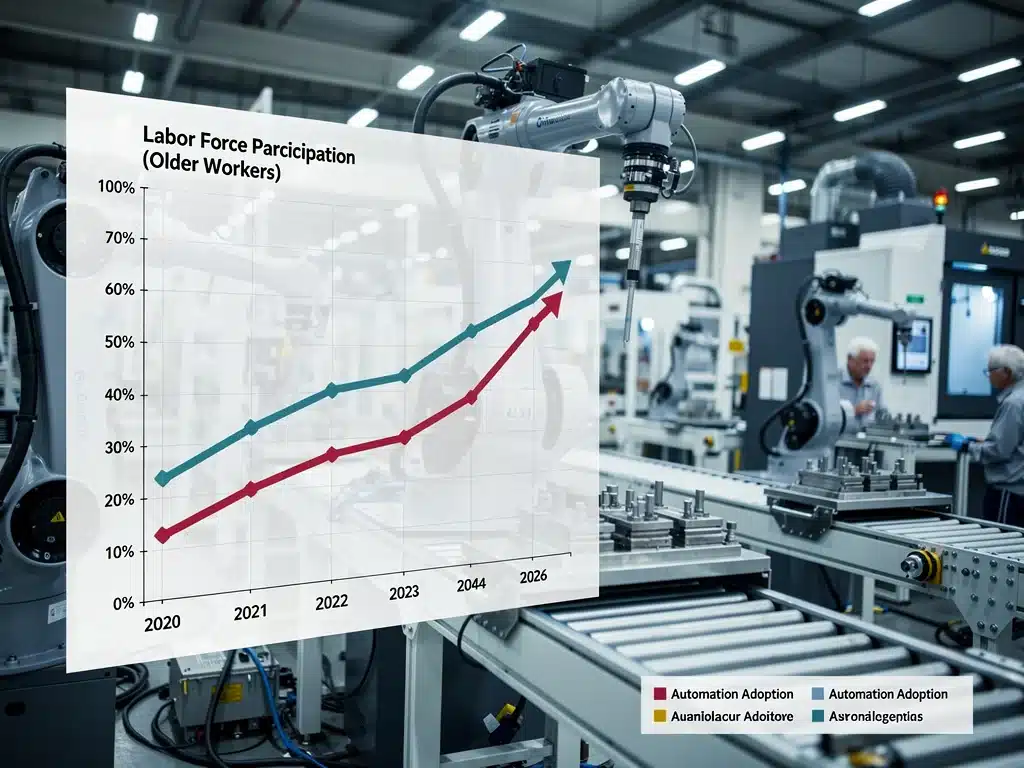
- Technological advancements: Automation and artificial intelligence can displace some workers while creating new demands for others, impacting participation based on skill adaptability.
- Workplace flexibility: The rise of remote work and flexible schedules, accelerated by recent global events, may encourage some individuals, particularly those with caregiving responsibilities, to remain in or re-enter the labor force.
The decline in LFPR is not uniform. For example, while the participation of individuals aged 55 and over might decrease as more baby boomers retire, those who remain in the workforce may do so out of necessity or a desire for continued engagement. Conversely, younger generations might face challenges entering the workforce due to skill mismatches or competition, affecting their initial participation.
Understanding these granular details is vital for crafting targeted policies. A blanket approach to boosting LFPR may be ineffective if it doesn’t address the specific barriers and incentives relevant to different demographic groups. The goal is to maximize the productive potential of all available workers, ensuring a robust and inclusive economy.
Economic ramifications of shifting labor demographics
The demographic shifts impacting the US labor force by 2026 will have far-reaching economic ramifications, touching everything from productivity and innovation to fiscal stability and social welfare programs. A shrinking and aging workforce can slow economic growth, strain public finances, and alter consumer demand patterns. These are not isolated issues but rather interconnected challenges that demand comprehensive solutions.
The overall size of the labor force directly correlates with the potential output of an economy. Fewer workers generally mean lower potential GDP growth, unless productivity per worker significantly increases. This places immense pressure on technological innovation and human capital development to compensate for demographic headwinds.
Productivity and innovation challenges
A key concern arising from these demographic shifts is the potential slowdown in productivity growth. As experienced workers retire, there’s a risk of losing valuable institutional knowledge and expertise. While younger workers bring fresh perspectives and digital fluency, they may lack the accumulated wisdom that drives incremental improvements and innovation in certain sectors.
- Skill gaps: Mismatches between the skills of the available workforce and the demands of emerging industries can hinder productivity.
- Reduced entrepreneurship: An aging population is often associated with lower rates of entrepreneurship, which is a vital source of innovation and job creation.
- Investment in automation: Businesses may increase investment in automation to offset labor shortages, which, while boosting productivity, could also reshape the demand for human labor.
Furthermore, an older workforce might be less inclined to adopt new technologies or adapt to rapidly changing work environments, although this is a generalization and many older workers are highly adaptable. The challenge lies in fostering an environment of continuous learning and reskilling for all age groups to maintain and enhance overall productivity. The dynamism of the economy depends heavily on its ability to innovate and adapt to new realities.
Policy responses and strategic adjustments
Addressing the complex challenges posed by demographic shifts requires a multifaceted approach involving policy responses and strategic adjustments from both government and the private sector. Without proactive measures, the long-term economic health of the US could be significantly impacted. These strategies must focus on enhancing labor supply, boosting productivity, and ensuring economic inclusivity.
Government policies can play a pivotal role in shaping the future labor market. This includes reforms in education, immigration, and social welfare programs. Simultaneously, businesses must adapt their hiring, training, and retention strategies to align with the evolving demographic realities. Collaboration between these sectors is essential for effective implementation.
Government initiatives and reforms
To mitigate the adverse effects of demographic shifts, governments can implement a range of policies aiming to bolster the labor force and support economic growth. These initiatives often focus on long-term human capital development and creating a more flexible labor market.
- Education and training: Investing in lifelong learning programs, vocational training, and STEM education to equip workers with future-proof skills.
- Immigration reform: Developing policies that attract skilled immigrants to fill labor shortages and contribute to economic dynamism.
- Healthcare and retirement: Reforming healthcare systems and retirement policies to support longer, healthier working lives and incentivize delayed retirement for those who wish to continue working.
Beyond these, policies promoting family-friendly workplaces, affordable childcare, and paid leave can help increase the labor force participation of parents, particularly mothers. The goal is to remove barriers to employment and create an environment where individuals can participate fully in the economy regardless of age or family status.
The effectiveness of these policies will depend on their adaptability and foresight. The demographic landscape is not static, and policy frameworks must be flexible enough to respond to emerging trends and unforeseen challenges. A robust policy framework, coupled with continuous evaluation, is critical for sustained economic health.
Technological adoption and workforce reskilling
The intersection of demographic shifts and rapid technological advancements presents both challenges and opportunities for the US labor market by 2026. As the workforce ages and certain labor pools shrink, technology, particularly automation and artificial intelligence, can fill gaps and enhance productivity. However, this also necessitates a significant focus on workforce reskilling and upskilling to ensure workers can adapt to new tools and roles.
The nature of work itself is changing, with routine tasks increasingly handled by machines, while demand for skills like critical thinking, creativity, and complex problem-solving grows. This evolution requires a proactive approach to education and training, moving beyond traditional models to embrace continuous learning throughout one’s career.
The imperative of continuous learning
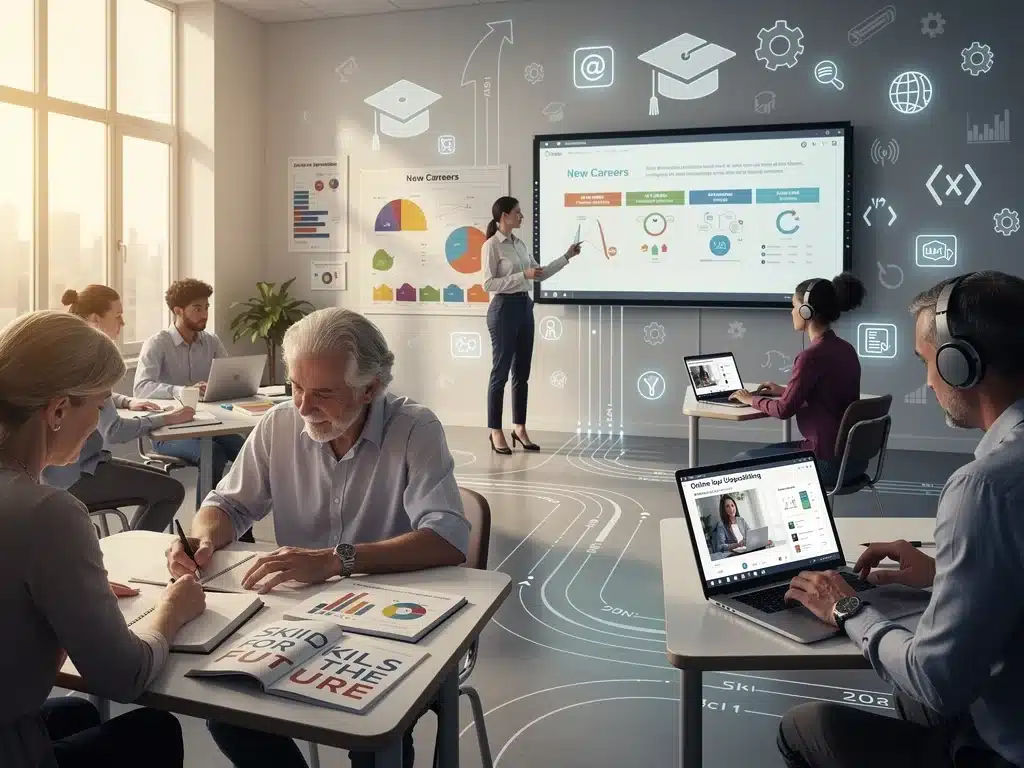
For individuals and the economy as a whole, continuous learning is no longer a luxury but a necessity. The shelf-life of skills is shortening, and workers must constantly update their knowledge base to remain relevant and competitive in the evolving job market. This is particularly true for older workers who may need to transition to new industries or roles.
- Digital literacy: Ensuring all workers have foundational digital skills to navigate modern workplaces and utilize new technologies effectively.
- Specialized technical skills: Training in areas like data science, cybersecurity, and advanced manufacturing to meet the demands of high-growth sectors.
- Soft skills development: Emphasizing skills such as communication, collaboration, adaptability, and emotional intelligence, which are increasingly valued in automated environments.
Employers have a critical role to play in facilitating this transition by investing in employee training programs, offering tuition assistance, and fostering a culture of learning within their organizations. Government initiatives can support these efforts through funding, partnerships with educational institutions, and tax incentives for businesses that invest in workforce development.
The successful integration of technology and human labor will depend on how effectively the workforce can be reskilled and upskilled. This symbiotic relationship, where technology augments human capabilities rather than simply replacing them, is key to maintaining high labor force participation and economic prosperity in the face of demographic change.
Social and cultural shifts impacting labor
Beyond the purely economic and demographic numbers, social and cultural shifts are also playing a significant role in shaping the US labor force by 2026. Evolving societal values, changing family structures, and a greater emphasis on work-life balance are influencing career choices, employment patterns, and overall labor force participation rates. These subtle yet powerful forces often underpin the more apparent economic trends.
The younger generations, for example, often prioritize flexibility, purpose-driven work, and mental well-being more than previous generations. This can lead to different career trajectories, a higher propensity for gig work, and a demand for employers who offer more than just a competitive salary. Understanding these values is crucial for attracting and retaining talent.
Changing expectations and work-life balance
The concept of work-life balance has gained considerable traction, particularly in the wake of global events that forced a re-evaluation of priorities. This shift directly impacts how individuals choose to engage with the labor market and what they expect from their employers.
- Flexible work arrangements: The demand for remote work, hybrid models, and flexible hours is likely to remain high, influencing who participates in the labor force and for how long.
- Gig economy growth: A preference for autonomy and diversified income streams contributes to the expansion of the gig economy, offering alternative forms of labor participation.
- Mental health and well-being: Increased awareness and prioritization of mental health are leading to demands for supportive workplace cultures and benefits that extend beyond traditional healthcare.
These social and cultural shifts require employers to rethink their talent management strategies. Companies that can adapt to these evolving expectations, offering greater flexibility, fostering inclusive cultures, and demonstrating a commitment to employee well-being, will be better positioned to attract and retain the talent needed to thrive in the changing demographic landscape. Those that fail to adapt may find themselves struggling to fill critical roles.
The interplay of these social and cultural factors with demographic trends creates a dynamic and ever-changing environment. Policymakers and businesses must remain attuned to these shifts, understanding that the human element of the labor force is influenced by more than just economic incentives. Creating a fulfilling and sustainable work environment is key to maximizing human potential.
Future outlook and strategic preparedness
Looking ahead to 2026 and beyond, the US economy faces a period of significant adaptation as it navigates the ongoing impact of demographic shifts on labor force participation rates. While challenges such as an aging population and potential labor shortages are evident, strategic preparedness can transform these into opportunities for innovation, efficiency, and sustained growth. The future outlook hinges on how effectively stakeholders collaborate to build a resilient and adaptable labor market.
The goal is not merely to react to demographic changes but to proactively shape a future where the US labor force remains robust, productive, and globally competitive. This requires a long-term vision, continuous investment in human capital, and a willingness to embrace new paradigms of work and employment.
Key areas for future focus
To ensure strategic preparedness, several key areas demand focused attention from policymakers, businesses, and educational institutions. These areas represent levers that can be pulled to influence the trajectory of the labor force and mitigate potential risks.
- Investing in early childhood education: Laying a strong foundation for future workforces by enhancing access to quality early education and development programs.
- Promoting diversity and inclusion: Leveraging the full potential of all demographic groups, including minorities, individuals with disabilities, and older workers, by removing barriers to participation.
- Fostering regional economic development: Supporting local economies to create diverse job opportunities and attract talent across different geographic areas within the US.
Furthermore, fostering a culture of innovation and adaptability within organizations will be crucial. Companies that encourage experimentation, invest in R&D, and embrace agile methodologies will be better equipped to respond to market changes and leverage new technologies. This forward-thinking approach will be vital for maintaining competitiveness.
The strategic preparedness for the future labor market is an ongoing process, not a one-time fix. It requires continuous monitoring of demographic trends, evaluation of policy effectiveness, and a commitment to lifelong learning and adaptation. By embracing these principles, the US can ensure its economy thrives amidst the evolving demographic landscape, securing a prosperous future for its workforce and its citizens.
| Key Demographic Shift | Economic Impact by 2026 |
|---|---|
| Aging Population | Decreased overall labor force participation, potential skill gaps, increased healthcare costs. |
| Declining Birth Rates | Fewer young entrants into the workforce, exacerbating labor shortages in the long term. |
| Technological Automation | Displacement of routine jobs, increased demand for specialized technical and soft skills, productivity gains. |
| Changing Social Values | Increased demand for work-life balance, flexible arrangements, and purpose-driven employment, influencing talent attraction. |
Frequently asked questions about US labor force demographics
An aging population is expected to decrease the overall labor force participation rate by 2026. As baby boomers retire, fewer experienced workers will be available, potentially leading to labor shortages and a loss of institutional knowledge across various sectors.
Immigration can play a crucial role in offsetting the effects of declining birth rates and an aging workforce by adding younger, working-age individuals to the labor force. Policies attracting skilled immigrants are key to maintaining economic dynamism and filling critical labor gaps.
Automation will likely reduce demand for routine tasks while increasing the need for specialized technical skills (e.g., AI, data science) and soft skills (e.g., problem-solving, creativity). This necessitates significant investment in reskilling and upskilling programs for the existing workforce.
Businesses can adopt strategies such as offering flexible work arrangements, investing in employee training and reskilling, promoting diversity and inclusion, and developing mentorship programs to transfer knowledge from older to younger workers. Adapting to evolving employee expectations is also vital.
Yes, declining birth rates are a significant long-term factor. Fewer births today mean fewer young adults entering the workforce in the coming decades, contributing to a smaller potential labor pool and exacerbating the effects of an aging population on labor supply.
Conclusion
The confluence of an aging population, evolving birth rates, and rapid technological advancement is fundamentally reshaping the US labor force, with profound implications for economic stability and growth by 2026. Addressing these demographic shifts requires a concerted effort from all sectors: government, businesses, and individuals. Proactive policy development, continuous investment in education and reskilling, and a flexible approach to employment are not merely options but necessities. By embracing these challenges with strategic foresight, the US can navigate the complex demographic landscape, ensuring a resilient, productive, and inclusive economy for the future. The ability to adapt and innovate in response to these changes will ultimately determine the nation’s economic trajectory in the coming years.