Vintage Menswear: 6 Classic 1950s Pieces Still Relevant in 2026
Advertisements
The enduring appeal of Vintage Menswear continues to influence contemporary wardrobes in 2026. Six mid-century staples, the tailored suit, leather jacket, cardigan, aloha shirt, chinos and polo shirt, show how practical construction, recognizable silhouettes and cultural history can remain relevant decades later.
The landscape of men’s fashion repeatedly revisits the past, and the 1950s remain an especially influential period for Vintage Menswear. Postwar prosperity, changing leisure habits and emerging youth cultures helped expand the range of clothing considered appropriate for modern men.
From structured tailoring to motorcycle jackets and relaxed sportswear, the decade brought together formal traditions and increasingly casual ways of dressing. Many of these garments had earlier origins, but the 1950s helped establish or expand their place within mainstream menswear.
Advertisements
Their continued relevance in 2026 does not mean modern wardrobes need to reproduce period outfits exactly. Instead, classic proportions, materials and styling ideas can be combined selectively with contemporary clothing.
The Enduring Appeal of the 1950s Tailored Suit
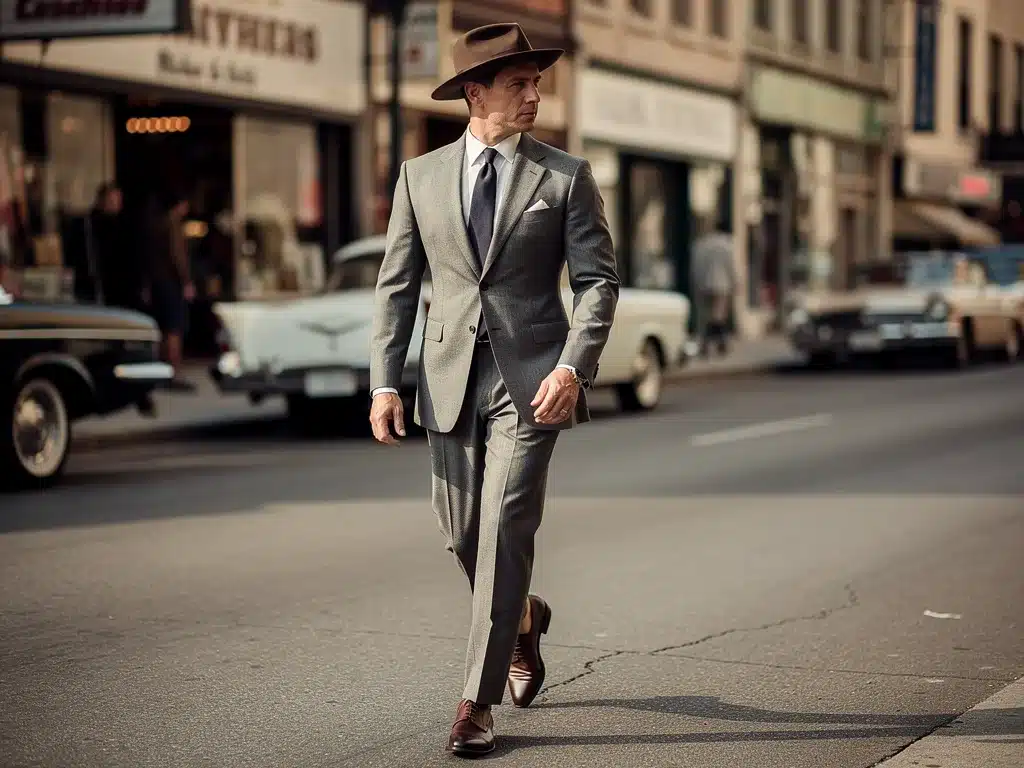
Tailored suits remained central to professional and formal menswear during the 1950s, when structured jackets, defined shoulders and higher-waisted trousers contributed to a polished silhouette associated with business, ceremony and respectable public presentation.
Not every 1950s suit followed exactly the same cut, because British, American, Italian and other tailoring traditions offered different proportions. Nevertheless, structured construction and fuller trousers distinguish many surviving examples from much slimmer suits popular during later decades.
For contemporary Vintage Menswear, those principles remain useful because a balanced jacket, well-positioned waist and properly proportioned trousers can create a strong silhouette without requiring an outfit to look like a historical costume.
The Art of the Drape and Fit
Quality mid-century tailoring relied on internal structure, fabric weight and careful fitting to determine how a jacket rested across the shoulders, chest and waist. Wool remained particularly important because it could provide durability, drape and comfort across different seasons.
Trousers were commonly worn higher than many modern casual styles, often with more room through the seat and thigh before narrowing toward the lower leg. This created a continuous visual line between jacket and trousers instead of emphasizing an extremely tight fit.
Modern wearers do not need to reproduce every historical proportion. Preserving adequate trouser rise, comfortable movement and a jacket that follows the wearer’s natural shape can capture mid-century refinement while remaining practical for contemporary use.
Modern Adaptations and Styling
Contemporary tailoring inspired by the 1950s often reduces shoulder padding and trouser fullness while preserving a more structured appearance than highly relaxed modern suiting. This allows the historical influence to remain visible without overwhelming the wearer.
A vintage or vintage-inspired jacket can also be separated from its original trousers and worn with flannel, chinos or other tailored pieces, provided the fabrics and proportions work together rather than appearing accidentally mismatched.
Fit remains more important than strict historical accuracy. Alterations to sleeve length, trouser hem and waist can make an older garment considerably easier to integrate into a modern wardrobe while preserving its original character.
- Consider slightly softer shoulders for a contemporary interpretation.
- Keep enough trouser rise and room to preserve balanced proportions.
- Combine vintage tailoring with simpler modern shirts and accessories.
The Rebel Spirit: The 1950s Leather Jacket
Leather motorcycle jackets became powerful cultural symbols during the 1950s, particularly as film, motorcycles and emerging youth culture associated them with independence and rebellion rather than solely with protective outerwear.
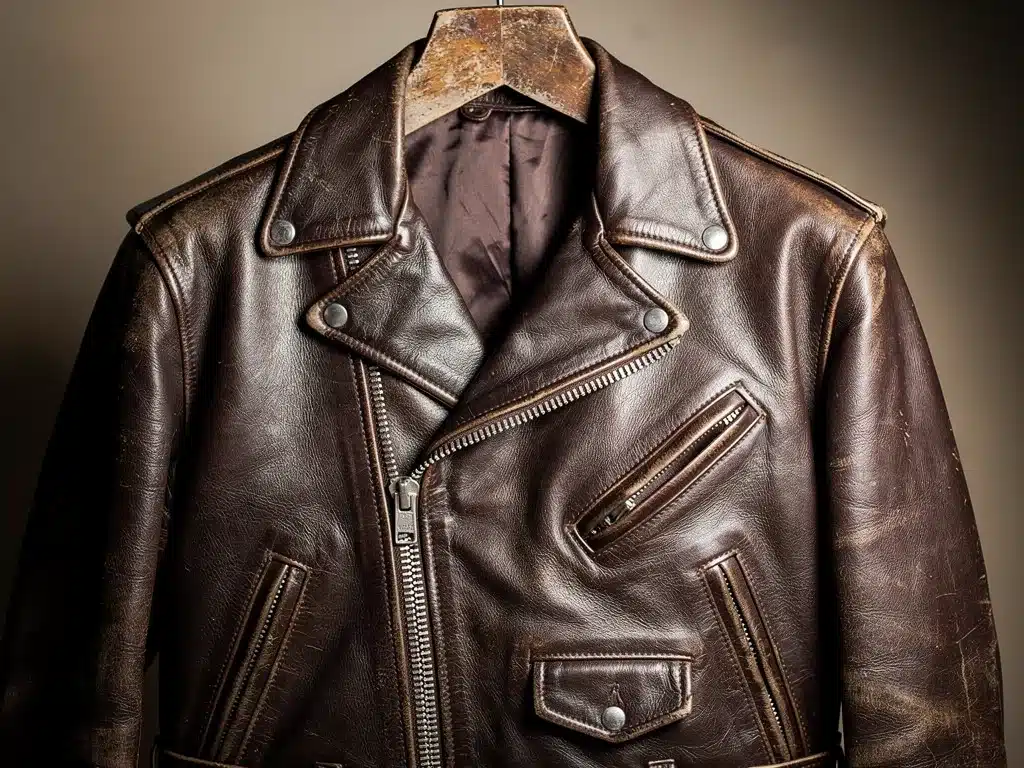
The Perfecto-style jacket is especially recognizable for its asymmetrical front zipper, lapels, metal hardware and relatively short body. Similar designs had existed before the decade, but postwar popular culture dramatically expanded their fashion significance.
That combination of practical construction and recognizable attitude keeps the leather jacket prominent within Vintage Menswear. Modern versions can reference mid-century motorcycle culture without requiring a complete period-inspired outfit.
From Motorcycle Gear to Fashion Icon
Motorcycle jackets were designed around practical needs such as abrasion resistance, secure closures and protection from wind. Heavy leather, substantial zippers, belted waists and zippered cuffs became functional details that also created a distinctive visual identity.
Film and popular music helped separate the jacket from its exclusively utilitarian associations. By the middle of the century, leather outerwear increasingly communicated a recognizable image of youthful nonconformity within American and international popular culture.
Authentic vintage examples may show creasing, fading or surface wear accumulated over decades. Those signs can add character, but buyers should still inspect seams, lining, zippers and leather condition before assuming that age automatically means quality.
Styling the Leather Jacket Today
A leather jacket remains easiest to wear when the rest of the outfit is comparatively simple. Straight jeans, plain knitwear, boots or understated sneakers allow the jacket’s texture and hardware to provide the strongest visual element.
Fit should permit comfortable movement without excessive fabric around the shoulders or waist. Vintage sizing can differ substantially from modern labeling, so actual garment measurements are more reliable than relying on the size printed inside.
For a less literal retro look, the jacket can be combined with contemporary trousers, fine-gauge knitwear or minimal footwear. This creates a connection with Vintage Menswear without reproducing the familiar movie-rebel uniform exactly.
- Pair with a plain T-shirt or knit for an uncomplicated look.
- Check shoulder, chest and sleeve measurements before buying vintage.
- Use contemporary trousers or footwear to reduce the costume effect.
The Casual Comfort of the Cardigan Sweater
Cardigans formed part of the broader movement toward more relaxed men’s clothing during the mid-20th century, offering warmth and structure without requiring the formality of a tailored jacket.
Wool and other knitted versions could be worn over collared shirts, polos or simpler casual layers, making the cardigan useful for university settings, leisure activities and informal social occasions.
That flexibility remains central to its role in Vintage Menswear. Unlike garments strongly associated with one particular subculture, the cardigan can move between traditional, academic, workwear-inspired and contemporary minimalist wardrobes.
The Evolution of Casual Wear
Mid-century menswear was gradually accommodating clothing that felt less formal while remaining presentable. Knitted garments fit this transition particularly well because they provided softness and comfort without abandoning the neat appearance expected in many social settings.
The cardigan could substitute for a jacket indoors or add an additional layer beneath heavier outerwear. Different gauges and collar treatments also allowed it to range from relatively refined to intentionally rugged.
Its appeal was therefore broader than a single “academic” stereotype. Students helped popularize knitted casualwear, but cardigans were also practical everyday garments for men whose wardrobes increasingly mixed formal and leisure clothing.
Contemporary Cardigan Styling
Fine-gauge cardigans can work with collared shirts and tailored trousers when a restrained smart-casual outfit is needed. Chunkier versions create more texture and pair naturally with denim, corduroy or heavier cotton trousers.
Length and proportion matter because an oversized cardigan can overwhelm shorter jackets or very narrow trousers. A cleaner silhouette usually comes from balancing the volume of the knit with the other garments.
Colors such as charcoal, navy, brown, cream and muted green can emphasize the mid-century influence without becoming theatrical. Patterned examples can also work when the rest of the outfit remains comparatively restrained.
- Use fine-gauge wool for a dressier interpretation.
- Choose heavier knits for textured casual outfits.
- Balance oversized cardigans with appropriately proportioned trousers.
The Iconic Aloha Shirt: A Splash of Color
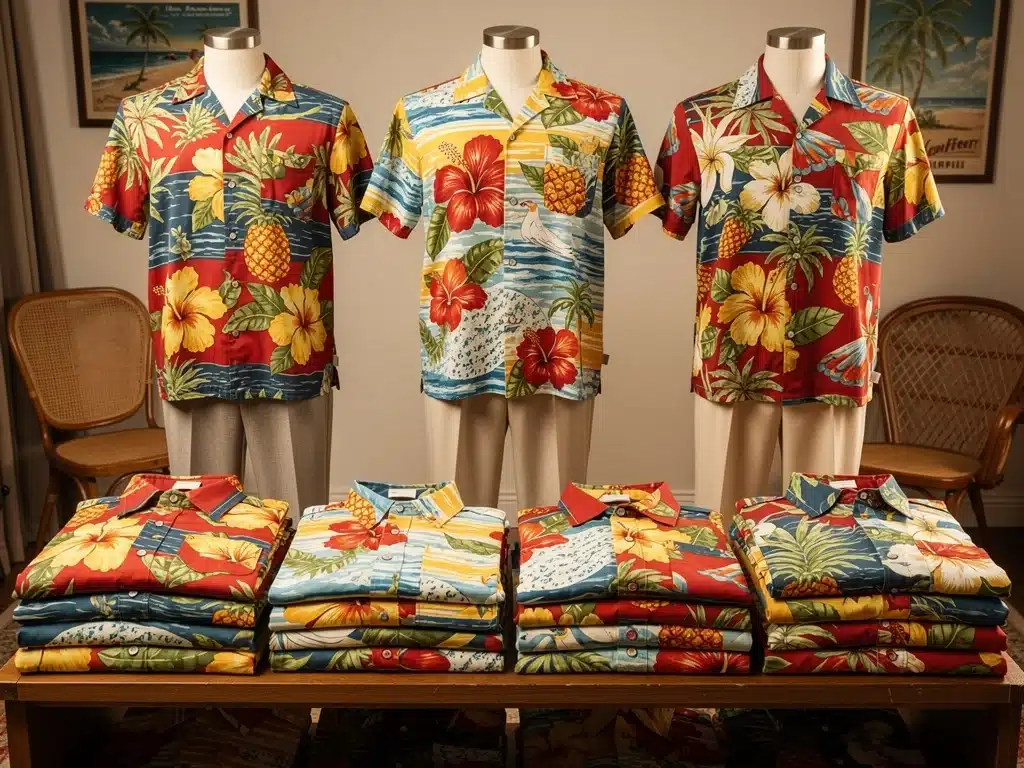
The aloha shirt did not originate in the 1950s. Versions appeared decades earlier in Hawaiʻi, but the period from the late 1940s through the 1950s became especially important for vivid rayon examples and their wider association with leisure culture.
University of Hawaiʻi research notes that brightly patterned rayon shirts were particularly prominent between 1945 and 1955. Tourism, returning servicemen and popular culture helped spread the garment far beyond the islands during the postwar period.
For Vintage Menswear, authentic mid-century aloha shirts are notable not simply because they are colorful, but because prints, fabric, construction and Hawaiian cultural context distinguish them from generic modern “tropical shirts.”
From the Islands to Mainstream Fashion
Early aloha shirts incorporated multiple cultural influences, including imported Japanese fabrics and motifs. By the postwar years, manufacturers were producing increasingly distinctive Hawaiian imagery using flowers, landscapes, surf scenes and other locally associated subjects.
The garments also suited Hawaiʻi’s climate because their relaxed construction and straight hems allowed them to be worn comfortably outside the trousers. That practical quality contributed to a recognizable regional style rather than simply an imported fashion trend.
Hollywood exposure and tourism helped introduce aloha shirts to mainland audiences, but their history should not be reduced entirely to celebrities. Their development is closely connected with Hawaiʻi’s textile industry, migration, local identity and tourism economy.
Modern Aloha Shirt Styling
Vintage-inspired aloha shirts can be paired with plain trousers or shorts so the print remains the dominant element. High-waisted chinos, linen trousers or straightforward denim can all work depending on the shirt’s fabric and color palette.
Rayon can produce the fluid drape associated with many postwar examples, while cotton generally feels more structured. Buyers interested in authentic vintage pieces should also inspect fragile seams, collars and fabric for age-related deterioration.
The continuing collector interest in aloha wear explains why the garment remains an important category within Vintage Menswear, rather than simply a recurring summer novelty.
- Let a strong print remain the focal point of the outfit.
- Consider rayon for a fluid mid-century-inspired drape.
- Inspect genuine vintage fabric carefully for deterioration.
The Versatile Chino Trousers
Chinos entered civilian wardrobes from military clothing traditions well before the 1950s, but postwar American casual style helped establish them as dependable alternatives to both formal wool trousers and denim.
Cotton twill construction offered durability without the rugged appearance of jeans, allowing chinos to work with button-down shirts, knitwear, polos and informal jackets across college, suburban and leisure settings.
The same adaptability explains their continuing place in Vintage Menswear. Their historical identity is subtle enough that modern chinos can reference mid-century style primarily through rise, cut and accompanying garments rather than obvious decorative details.
Military Origins to Civilian Staple
Khaki and chino fabrics had long-standing military associations because durable cotton twill was practical for uniforms in warm climates. Civilian adoption transformed that functional foundation into one of the most versatile forms of casual trousers.
By the postwar decades, chinos fit naturally into expanding collegiate and leisure wardrobes. Neutral shades such as khaki could be combined easily with loafers, canvas shoes, sports shirts, sweaters and lightweight outerwear.
The transition illustrates a broader pattern within menswear: garments initially designed around military or occupational requirements frequently enter everyday fashion because their simplicity, durability and functionality remain useful after their original context changes.
Current Chino Styling
Modern chinos are available in everything from narrow low-rise cuts to wider high-rise silhouettes. For a stronger mid-century reference, a moderate or higher rise with some room through the thigh generally works better than an extremely tight cut.
Khaki remains the historical reference point, but navy, olive, stone, brown and grey can perform the same wardrobe function. The best choice depends more on the surrounding clothes than on reproducing one specific period color.
Chinos can be paired with loafers and tailoring for a smarter outfit or with simple sneakers and knitwear for everyday wear. Their versatility makes them one of the easiest vintage-influenced pieces to adopt.
- Choose a moderate or higher rise for stronger vintage proportions.
- Try khaki, olive, navy, stone or brown.
- Combine with loafers, knitwear or simple casual jackets.
The Classic Polo Shirt
The polo shirt was already established before the 1950s, particularly through René Lacoste’s tennis shirt from the 1930s. The decade nevertheless played an important role in expanding similar knitted sports shirts within everyday men’s wardrobes.
Fred Perry introduced his original all-white M3 tennis shirt in 1952, combining lightweight cotton piqué with a streamlined sporting silhouette. The shirt subsequently developed strong associations with British youth culture and casual streetwear.
These histories make the polo a useful example of how sports clothing enters mainstream Vintage Menswear. Its collar provides more structure than a T-shirt while its knitted construction keeps it less formal than a woven dress shirt.
Sportswear’s Influence on Everyday Fashion
The rise of the polo reflects the wider influence of leisure and athletic clothing on 20th-century menswear. Garments created for movement increasingly became acceptable away from courts and sports clubs as everyday dress grew more casual.
Lacoste established its influential piqué tennis shirt decades earlier, while Fred Perry’s 1952 version became another major reference point during the 1950s. Their histories demonstrate that the polo cannot be attributed exclusively to one decade.
What the period helped reinforce was its versatility: a polo could communicate athleticism and neatness simultaneously, functioning with shorts, chinos or casual trousers without requiring the formality of a woven shirt and tie.
Modern Polo Shirt Styling
Fabric quality and fit strongly influence how a polo appears. Cotton piqué produces the familiar textured sportswear look, while knitted wool, cotton or blended versions can create a softer and somewhat dressier silhouette.
A polo works naturally with chinos, tailored shorts or higher-waisted trousers, particularly when the hem length and sleeve proportions suit the wearer rather than following an excessively long or tight contemporary cut.
For a subtle Vintage Menswear reference, choose restrained colors, traditional collars and relatively simple branding. The resulting outfit can acknowledge mid-century sportswear without appearing dependent on retro styling.
- Choose quality piqué or knitted fabrics with good structure.
- Pair polos with chinos or tailored shorts for a balanced look.
- Use restrained branding for a more timeless appearance.
| Key Piece | Why It Still Works |
|---|---|
| Tailored Suit | Structured proportions remain useful for polished formal and tailored outfits. |
| Leather Jacket | Durable motorcycle design still adds texture and recognizable character to casual clothing. |
| Cardigan Sweater | Flexible knitwear bridges casual and smarter wardrobes through easy layering. |
| Aloha Shirt | Distinctive prints and postwar cultural history give it lasting summer and collector appeal. |
| Chino Trousers | Simple cotton construction works across casual, collegiate and smart-casual wardrobes. |
| Polo Shirt | Sportswear origins combine comfort with enough structure for refined casual dressing. |
Frequently Asked Questions About Vintage Menswear
Many remain useful because their underlying designs are practical and adaptable. Tailoring, knitwear, chinos and sports shirts can be combined with contemporary clothing without reproducing an entire historical outfit.
Start with one vintage or vintage-inspired piece and combine it with simpler contemporary clothing. Paying attention to measurements and proportion usually produces a more natural result than recreating a complete period look.
They can be appropriate when the condition, fabric, tailoring and level of formality suit the event. Older proportions may benefit from careful alterations, but unnecessary modifications can also reduce the character or collectible value of an authentic suit.
Postwar aloha shirts are notable for distinctive rayon fabrics, vivid prints and their connection with Hawaiian textile history, tourism and leisure culture. The shirt itself predates the 1950s, so the decade should be understood as an important period of popularity rather than its origin.
Specialized vintage dealers, established online marketplaces, estate sales and vintage fairs are common sources. Buyers should compare measurements, construction details, labels, condition and seller documentation rather than assuming every item described as “1950s” is accurately dated.
Looking Ahead: The Continued Influence of Mid-Century Style
The continued relevance of Vintage Menswear demonstrates how certain garments survive fashion cycles because their basic functions remain useful. Tailoring creates structure, leather provides durable outerwear, knitwear layers easily and chinos or polos adapt to numerous settings.
Understanding historical context also prevents vintage style from becoming a collection of inaccurate stereotypes. A 1950s suit, aloha shirt or classic leather jacket becomes more interesting when its origins, construction and cultural associations are understood accurately.
In 2026, these six pieces remain useful reference points rather than mandatory formulas. Their strongest contribution to contemporary style is showing how proportion, material, practicality and personal expression can give well-designed clothing relevance far beyond the decade in which it became famous.