Consumer Sentiment Index 2026: Economic Behavior Insights
Advertisements
The Consumer Sentiment Index for 2026 provides a forward-looking perspective on economic behavior, serving as a critical barometer for understanding American consumers’ future spending and saving intentions.
As we advance into 2026, understanding the Consumer Sentiment Index for 2026 becomes paramount for businesses, policymakers, and individual households alike. This vital economic indicator offers a window into the collective mood of American consumers, providing invaluable insights into their anticipated spending, saving, and investment behaviors over the next 12 months. What drives this sentiment, and how will it shape the economic landscape?
Advertisements
Understanding the Consumer Sentiment Index
The Consumer Sentiment Index (CSI) is a key economic indicator that measures the optimism or pessimism of consumers regarding the state of the economy. It’s a powerful predictor of consumer spending, which forms a significant portion of economic activity in the United States. A higher index typically suggests that consumers feel more secure about their financial future and the broader economy, making them more likely to spend.
Conversely, a lower index often indicates apprehension, leading to reduced spending and increased saving. The data for the CSI is usually gathered through surveys, asking consumers about their current financial situation, their expectations for the future, and their perceptions of business conditions and employment opportunities. These questions are carefully crafted to capture a comprehensive picture of consumer confidence.
Components of Consumer Sentiment
Several critical components contribute to the overall Consumer Sentiment Index. Each element plays a unique role in shaping how consumers view their economic prospects and, by extension, their purchasing decisions.
- Personal Financial Situation: How consumers perceive their current and future income and wealth.
- Business Conditions: Their outlook on general economic conditions, including GDP growth and corporate profitability.
- Employment Prospects: Expectations regarding job availability and unemployment rates.
- Purchasing Intentions: Willingness to make major purchases, such as homes, cars, or large appliances.
These components are not isolated; they interact dynamically. For instance, strong employment prospects can bolster confidence in personal finances, leading to a more positive outlook on business conditions and a greater willingness to make significant purchases. The intricate interplay makes the CSI a complex yet insightful metric.
The methodology behind calculating the CSI ensures a representative sample of the population is surveyed, allowing for a broad and accurate reflection of national sentiment. Understanding these underlying factors is crucial for interpreting the index’s movements and anticipating their economic impact. This detailed breakdown allows for a more nuanced understanding of consumer behavior beyond a single numerical value.
Key Influencers on Consumer Sentiment in 2026
Looking ahead to the Consumer Sentiment Index for 2026, several macro and microeconomic factors are poised to exert significant influence. These factors can shift consumer confidence, leading to either an uptick in spending or a more cautious approach to financial decisions. Anticipating these influences is vital for economic forecasting.
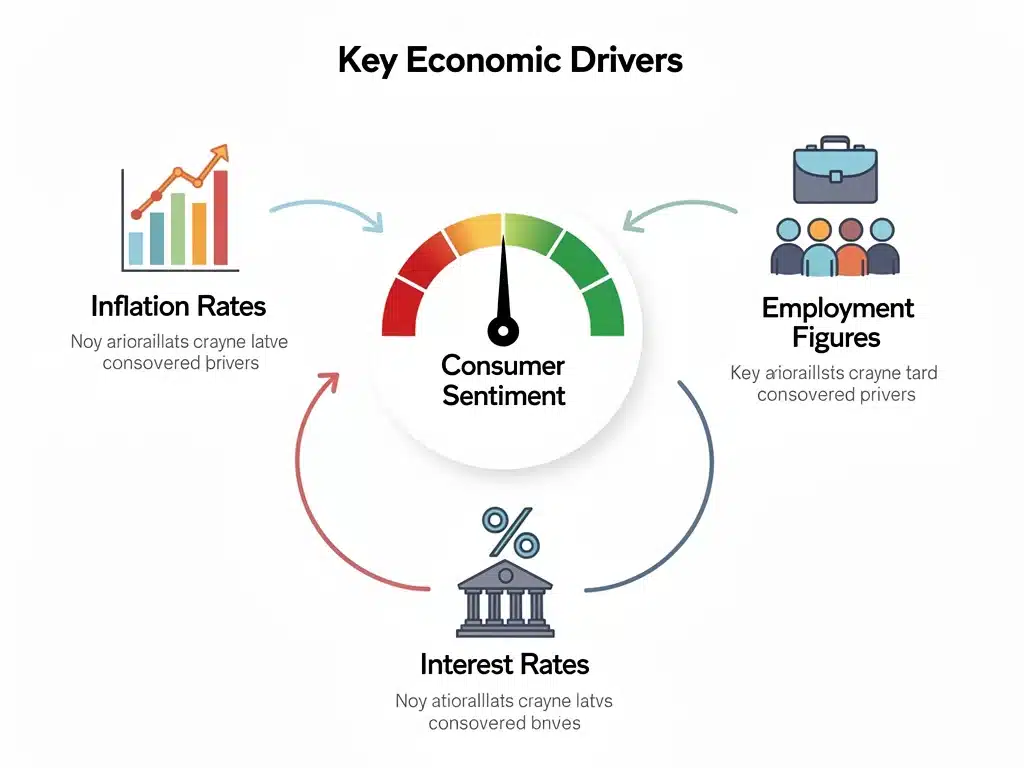
Inflation, interest rates, and employment levels traditionally play pivotal roles. However, in 2026, emerging trends and unforeseen global events could also introduce new layers of complexity. Businesses and policymakers must remain agile to adapt to these evolving dynamics.
Economic Factors Shaping Outlook
The traditional economic indicators will continue to be primary drivers of consumer sentiment. Stable inflation, for example, allows consumers to plan their spending more effectively and reduces the erosion of purchasing power. Conversely, volatile inflation can quickly dampen spirits.
- Inflation Rates: Persistent high inflation erodes purchasing power, leading to reduced confidence.
- Interest Rates: Higher rates can deter borrowing for major purchases and investments, affecting sentiment.
- Unemployment Data: Low unemployment generally fosters a sense of job security and economic stability.
- Wage Growth: Rising wages that outpace inflation can significantly boost consumer confidence.
Beyond these, government fiscal policies, such as tax reforms or stimulus packages, can also have a profound impact. How these policies are perceived by the public in terms of their long-term benefits and fairness will shape household economic expectations. The interplay of these forces creates a complex web of influences.
Global economic stability also plays an increasingly important role. Geopolitical events, supply chain disruptions, and international trade relations can ripple through the domestic economy, affecting everything from energy prices to the availability of goods. Consumers are increasingly aware of these broader global dynamics.
Projected Trends for the Consumer Sentiment Index 2026
Forecasting the Consumer Sentiment Index for 2026 involves an intricate analysis of current trajectories and anticipated shifts in the economic landscape. While exact predictions are challenging, certain trends are likely to shape consumer confidence in the coming year. These projections are crucial for strategic planning across various sectors.
Experts often look at a blend of historical data, current economic indicators, and forward-looking models to construct these projections. The consensus view, while not always perfect, provides a valuable baseline for understanding potential future scenarios.
Scenarios for Consumer Confidence
Several scenarios could unfold for consumer confidence in 2026, each with distinct implications. A baseline scenario often assumes a continuation of current economic conditions with gradual improvements, while more optimistic or pessimistic outlooks consider significant deviations.
- Optimistic Scenario: Sustained wage growth, declining inflation, and stable employment lead to high confidence and increased spending.
- Moderate Scenario: Economic growth continues steadily, but some inflationary pressures or geopolitical uncertainties temper exuberance.
- Pessimistic Scenario: Recurrent inflation, rising unemployment, or significant global disruptions lead to cautious spending and heightened saving.
The transition to a more sustainable economy, including investments in green technologies and infrastructure, could also influence sentiment. Consumers may feel more optimistic if they perceive a clear path toward a stable and prosperous future, driven by innovation and responsible economic stewardship. The impact of technological advancements, particularly AI and automation, on job markets will also be a key area of focus.
Furthermore, demographic shifts and evolving consumer preferences will likely play a role. Younger generations, for example, may have different financial priorities and spending patterns compared to older demographics, which could subtly influence the overall index. Understanding these generational differences is increasingly important for businesses targeting specific consumer segments.
Impact on Consumer Spending and Investment
The implications of the Consumer Sentiment Index for 2026 extend directly to real-world economic activities, most notably consumer spending and investment patterns. A confident consumer is a spending consumer, driving demand and fostering economic growth. Conversely, a fearful consumer tends to hoard resources, leading to economic stagnation.
Businesses rely heavily on these indicators to make decisions about production, inventory, and marketing strategies. A clear understanding of consumer sentiment allows them to align their offerings with anticipated demand, optimizing their operations and maximizing profitability. Policymakers also use this data to fine-tune monetary and fiscal interventions.

Spending Habits and Economic Activity
High consumer sentiment typically translates into robust spending across various sectors. This includes day-to-day purchases, as well as significant investments in durable goods and services. The ripple effect of increased spending is felt throughout the economy.
- Retail Sales: A direct beneficiary of strong consumer confidence, leading to higher sales volumes.
- Housing Market: Confident consumers are more likely to purchase homes or invest in home improvements.
- Automotive Industry: Major purchases like cars are often postponed during periods of low confidence.
- Travel and Leisure: Discretionary spending on experiences tends to rise when consumers feel financially secure.
Moreover, investment decisions are profoundly affected. When consumers feel positive about the economy, they are more inclined to invest in stocks, real estate, or other assets, further stimulating economic activity. This creates a positive feedback loop, where confidence fuels investment, which in turn fuels growth and reinforces confidence.
Conversely, declining sentiment can trigger a slowdown. Consumers may delay major purchases, opt for cheaper alternatives, or reduce discretionary spending. This cautious behavior can lead to reduced demand, affecting business revenues and potentially leading to job cuts, thereby exacerbating the downturn. The psychological aspect of economic behavior is undeniably powerful.
Regional Variations in Consumer Sentiment
While the overall Consumer Sentiment Index for 2026 provides a national picture, it’s crucial to recognize that sentiment can vary significantly across different regions of the United States. Economic conditions are not uniform, and local factors often play a substantial role in shaping how consumers perceive their financial well-being and future prospects.
These regional disparities are influenced by a multitude of factors, ranging from local industry performance to demographic characteristics. Understanding these nuances is essential for businesses operating on a regional scale and for policymakers developing targeted economic strategies.
Factors Driving Local Sentiment
Specific industries, local employment rates, and regional cost of living all contribute to the unique economic landscape of different areas. For instance, a region heavily reliant on a particular industry might see its consumer sentiment fluctuate with the fortunes of that sector.
- Local Job Markets: Areas with strong job growth and low unemployment typically exhibit higher sentiment.
- Industry Concentration: Regions dominated by volatile industries may experience more significant swings in confidence.
- Cost of Living: High living costs, particularly housing, can depress sentiment even in areas with strong job markets.
- Local Economic Policies: State and local government initiatives can influence consumer perceptions of economic opportunity.
Furthermore, natural disasters or significant local events can have a profound and immediate impact on regional sentiment, often leading to temporary dips in confidence as communities recover and rebuild. The resilience of local economies to such shocks is also an important determinant.
Demographic composition also plays a role. Regions with a younger, growing population might exhibit different spending and saving patterns compared to areas with an older, retired population. These demographic variations shape local demand and contribute to the overall regional sentiment profile. Therefore, a one-size-fits-all approach to understanding consumer behavior may prove ineffective.
Strategies for Businesses and Policymakers in 2026
Given the anticipated dynamics of the Consumer Sentiment Index for 2026, both businesses and policymakers must develop proactive strategies to navigate the evolving economic landscape. Understanding consumer confidence is not merely an academic exercise; it’s a practical necessity for sustainable growth and stability.
For businesses, this means adapting product offerings, marketing messages, and operational strategies to align with consumer moods. For policymakers, it involves crafting effective interventions that support economic health and bolster public confidence. Strategic foresight is paramount in a rapidly changing environment.
Business Adaptations and Policy Responses
Businesses that closely monitor consumer sentiment can make more informed decisions, whether it’s adjusting pricing strategies, launching new products, or re-evaluating expansion plans. Agility and responsiveness are key to thriving in varying economic climates.
- Flexible Business Models: Companies should be prepared to scale operations up or down based on consumer demand.
- Targeted Marketing: Messaging should resonate with the prevailing consumer mood, emphasizing value during caution or innovation during optimism.
- Diversified Offerings: A broad product and service portfolio can buffer against shifts in specific market segments.
- Investment in R&D: Innovating to meet future consumer needs, even during challenging times, can yield long-term benefits.
Policymakers, on the other hand, have a crucial role in fostering an environment conducive to positive sentiment. This includes managing inflation through monetary policy, implementing fiscal policies that support employment and economic growth, and addressing structural issues that might undermine long-term confidence. Clear and consistent communication from government bodies can also help stabilize expectations.
Investing in education and workforce development, for instance, can enhance long-term employment prospects and boost confidence in future earning potential. Similarly, policies that promote fair competition and protect consumers can build trust in the economic system. A collaborative approach between the public and private sectors can yield the most robust outcomes for the economy.
The Role of Technology and Digital Transformation
The digital revolution continues to profoundly influence how consumers interact with the economy, and its impact on the Consumer Sentiment Index for 2026 cannot be overstated. Technology not only shapes how consumers spend and save but also how they perceive economic information and form their expectations. Digital transformation is a continuous force, redefining market dynamics.
From online shopping habits to the pervasive spread of financial news through social media, technology amplifies certain trends and introduces new variables into the consumer confidence equation. Understanding these technological shifts is vital for accurately interpreting and responding to sentiment.
Digital Impact on Consumer Behavior
The accessibility of information through digital channels means that consumers are often better informed, or at least more exposed to economic news, than ever before. This can lead to quicker reactions to economic shifts, both positive and negative.
- E-commerce Growth: The ease of online shopping can sustain spending even during periods of moderate caution.
- Financial Apps: Digital tools empower consumers to manage finances, potentially increasing confidence in their financial control.
- Information Dissemination: Rapid spread of economic news (positive or negative) can quickly sway public sentiment.
- Personalized Experiences: Technology allows businesses to tailor offerings, potentially boosting consumer satisfaction and loyalty.
Furthermore, the rise of fintech and digital currencies could introduce new forms of investment and saving, potentially altering traditional consumer financial behaviors. As these technologies mature, their integration into daily life will likely have a measurable effect on how individuals view their economic prospects and opportunities. The convenience and efficiency offered by digital platforms can sometimes outweigh other hesitations.
The gig economy, facilitated by digital platforms, also plays a role in employment and income generation, affecting a segment of the workforce’s financial stability and outlook. These evolving employment models can contribute to a more flexible, yet sometimes less secure, economic environment for some, influencing their overall sentiment. Businesses must consider how their digital strategies align with these evolving consumer experiences.
| Key Aspect | Brief Description |
|---|---|
| CSI Definition | Measures consumer optimism/pessimism on the economy, indicating future spending and saving. |
| Key Influencers | Inflation, interest rates, employment, wage growth, and global events significantly impact sentiment. |
| Economic Impact | Directly affects consumer spending on goods, services, and investments, driving economic activity. |
| Strategic Importance | Crucial for businesses to adapt strategies and for policymakers to ensure economic stability and growth. |
Frequently Asked Questions About Consumer Sentiment in 2026
The primary purpose is to gauge the confidence of consumers regarding the economy and their financial well-being over the next 12 months. This helps predict future spending, saving, and investment behaviors, offering insights for economic forecasting and strategic planning.
High or volatile inflation rates typically erode consumer purchasing power, leading to increased pessimism. When consumers expect prices to rise significantly, they tend to become more cautious with their spending, thereby lowering the Consumer Sentiment Index.
Yes, while the CSI is a national average, significant shifts in major regional economies can influence the overall index. Local employment rates, industry performance, and cost of living variations create regional disparities that collectively impact national sentiment.
Technology, through e-commerce, financial apps, and rapid information dissemination, significantly influences how consumers perceive and react to economic news. It can amplify trends, provide tools for financial management, and shape spending behaviors, impacting overall sentiment.
For businesses, the CSI is a crucial indicator for anticipating demand. It guides decisions on production, inventory, marketing, and expansion. Understanding consumer confidence allows businesses to align their strategies with consumer behavior, optimizing profitability and resource allocation.
Conclusion
The Consumer Sentiment Index for 2026 stands as a critical barometer for navigating the economic currents of the upcoming year. It encapsulates the collective hopes, fears, and expectations of American consumers, directly influencing their financial decisions and the broader economic landscape. From the intricate dance of inflation and interest rates to the transformative power of technology and regional economic nuances, numerous factors will converge to shape this vital indicator. For businesses and policymakers, a nuanced understanding and proactive response to these sentiments will be paramount for fostering stability, growth, and prosperity. Vigilance and adaptability will be key in harnessing the insights provided by consumer confidence to build a resilient economic future.