2026 National Debt: Economic Consequences & Future Outlook
Advertisements
The 2026 national debt is projected to continue its upward trajectory, presenting significant economic consequences through increased interest payments, potential inflation, and reduced fiscal flexibility for the United States.
As we approach 2026, the discussion around the United States’ financial health invariably turns to the burgeoning 2026 national debt. This isn’t just a number; it represents the cumulative effect of past spending, economic policies, and unforeseen global events. Understanding its implications is crucial for every American, as it directly impacts everything from interest rates on mortgages to the funding for essential public services.
Advertisements
The Current State of the National Debt and Its Trajectory
The national debt of the United States has been a subject of increasing concern for decades, and its growth trajectory shows no signs of slowing down as we look towards 2026. This monumental figure represents the total outstanding borrowings by the U.S. federal government, accumulated over time to cover budget deficits. These deficits occur when government spending exceeds revenue, necessitating borrowing from both domestic and international lenders.
Several factors contribute to this persistent increase. Entitlement programs like Social Security and Medicare, which represent a significant portion of federal spending, face demographic pressures as the population ages. Defense spending, infrastructure projects, and responses to economic crises, such as the COVID-19 pandemic, also add substantially to the debt. The interplay of these elements creates a complex financial landscape, making the debt a multifaceted challenge rather than a simple accounting problem.
Historical Context of Debt Growth
To truly grasp the scale of the 2026 national debt, it’s essential to consider its historical context. While debt has always been a feature of national finance, its recent acceleration is notable. Major wars and economic downturns have historically led to spikes in borrowing. However, even during periods of relative peace and economic growth, the debt has continued its upward climb due to structural imbalances in federal budgets.
- Post-World War II: Debt-to-GDP ratio peaked, then declined with strong economic growth.
- 1980s: Increased defense spending and tax cuts led to a significant rise in debt.
- 2000s: Wars in Afghanistan and Iraq, coupled with tax cuts and the 2008 financial crisis, fueled further growth.
- 2020s: The COVID-19 pandemic triggered unprecedented fiscal responses, pushing debt to new highs.
The current path suggests that without significant policy changes, the debt will continue to grow faster than the economy, leading to a higher debt-to-GDP ratio. This ratio is a key indicator of a nation’s ability to pay off its debt and is closely watched by economists and financial markets. A perpetually rising ratio can signal long-term fiscal unsustainability.
Understanding these historical patterns helps us contextualize the challenges we face in 2026. The national debt is not merely a snapshot in time but a continuous narrative of fiscal decisions and economic realities, each chapter building upon the last to shape the nation’s financial future.
Economic Consequences: Interest Rates and Inflation
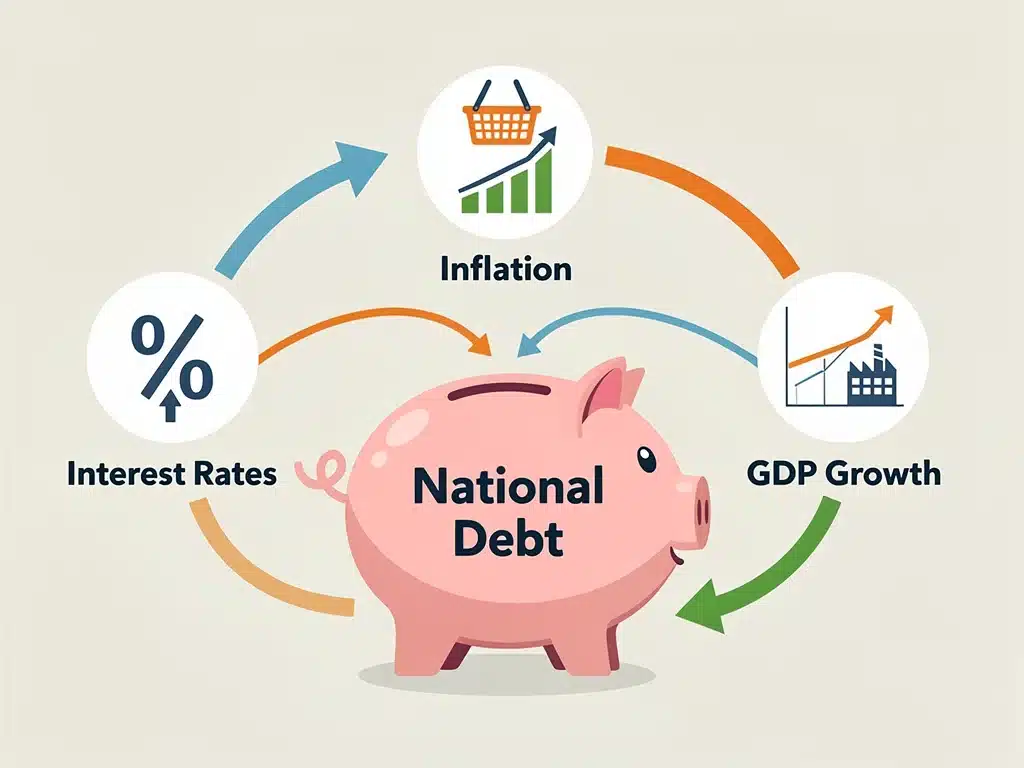
The sheer volume of the national debt has profound implications for the broader economy, particularly concerning interest rates and inflation. As the government borrows more, it competes with private sector borrowers for available capital, which can drive up interest rates across the board. This ripple effect means higher borrowing costs for businesses, individuals, and states, potentially stifling investment and economic growth.
Higher interest rates on government debt also mean a larger portion of the federal budget must be allocated to servicing this debt. This diverts funds from other critical areas like infrastructure, education, or research and development, which are vital for long-term economic prosperity. The opportunity cost of these interest payments can be substantial, limiting the government’s fiscal flexibility to respond to future crises or invest in growth initiatives.
The Inflationary Pressure of Debt
Another significant concern stemming from a high national debt is the potential for inflation. While not a direct one-to-one correlation, persistent large deficits and the associated borrowing can contribute to inflationary pressures. When the government finances its spending by printing more money (monetizing the debt), or if the market perceives a lack of fiscal discipline, it can erode confidence in the currency and lead to rising prices.
Inflation, in turn, reduces the purchasing power of consumers and increases the cost of living. It disproportionately affects those on fixed incomes and can create economic uncertainty, making it harder for businesses to plan and invest. The Federal Reserve’s role in managing inflation becomes even more complex in an environment of high national debt, as aggressive interest rate hikes to combat inflation could simultaneously increase the government’s debt servicing costs.
- Crowding Out: Government borrowing can ‘crowd out’ private investment by increasing demand for capital, pushing up interest rates.
- Fiscal Drag: A larger share of the budget dedicated to interest payments reduces funds available for productive investments.
- Currency Devaluation: High debt can lead to a loss of confidence in a nation’s currency, potentially causing it to devalue.
- Inflation Spiral: If debt monetization occurs, it can lead to an inflationary spiral, eroding economic stability.
The delicate balance between managing debt, controlling inflation, and fostering economic growth is a central challenge for policymakers as we look towards 2026. The path chosen in response to these pressures will significantly shape the economic landscape for years to come, impacting everything from consumer prices to job creation.
Impact on Future Generations and Public Services
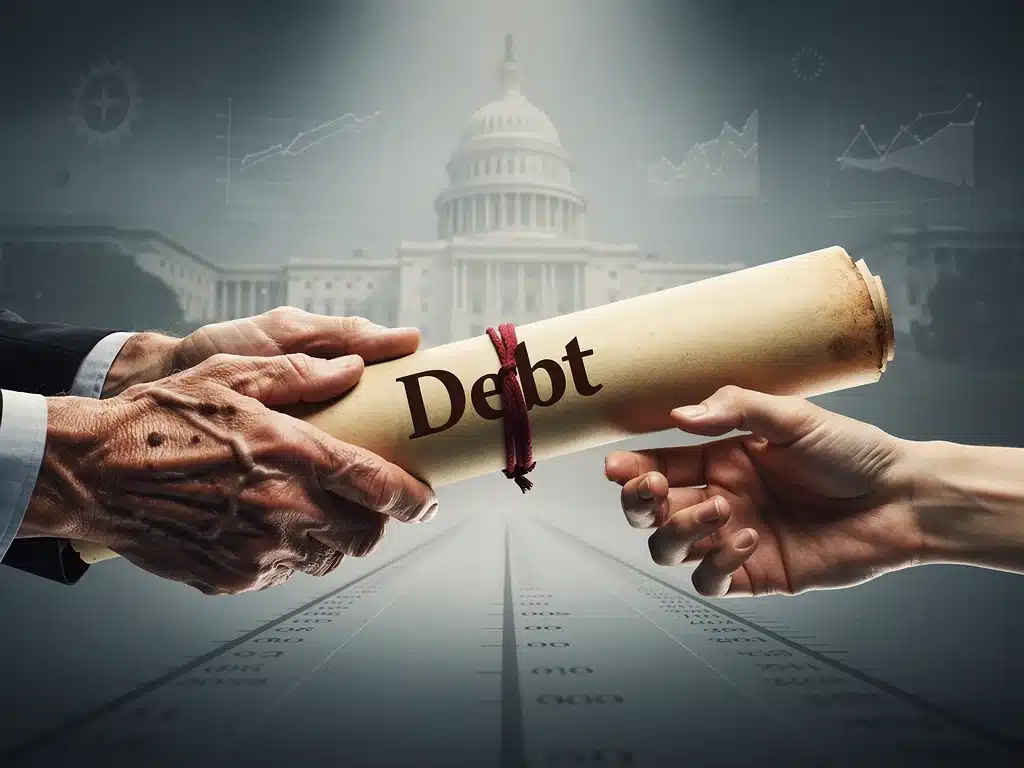
The escalating 2026 national debt is not merely an abstract financial figure; it represents a tangible burden that will inevitably fall upon future generations. Each dollar added to the debt today implies a future tax obligation or a reduction in future public services. This intergenerational transfer of wealth and responsibility is one of the most ethically challenging aspects of persistent deficit spending.
Future generations will either face higher taxes to service the accumulated debt or experience a decline in the quality and availability of public services that their parents and grandparents enjoyed. This could include reduced funding for education, infrastructure, healthcare, and environmental protection, all of which are crucial for long-term societal well-being and economic competitiveness. The fiscal choices made today have long-lasting consequences, shaping the opportunities and challenges for those yet to come.
Strain on Essential Public Services
A significant national debt can also place considerable strain on the government’s ability to fund essential public services. As interest payments consume a larger share of the federal budget, less money is available for discretionary spending. This creates difficult choices for policymakers, who must decide which programs to cut or underfund. The sectors most vulnerable to these cuts include:
- Education: Funding for schools, universities, and research can be reduced, impacting human capital development.
- Infrastructure: Roads, bridges, public transit, and utilities may suffer from underinvestment, hindering economic efficiency.
- Healthcare: While entitlement programs like Medicare are major drivers of debt, other public health initiatives could face cuts.
- Environmental Protection: Programs addressing climate change and conservation might be deprioritized.
The long-term effects of underfunding these areas can be severe, leading to a decline in the nation’s overall quality of life and its ability to compete globally. A strong economy relies on a well-educated workforce, robust infrastructure, and a healthy population, all of which require sustained public investment. The national debt can act as a significant impediment to these necessary investments.
Ultimately, the burden on future generations is multifaceted, encompassing both direct financial obligations and indirect costs through diminished public services. Addressing the national debt requires a forward-looking perspective, acknowledging that today’s fiscal decisions will shape the world our children and grandchildren inherit.
Global Economic Standing and Investor Confidence
The United States’ national debt also plays a crucial role in its global economic standing and the confidence of international investors. As the world’s largest economy and the issuer of the global reserve currency, the U.S. has historically enjoyed a high degree of trust from creditors. However, a continuously increasing debt, particularly if coupled with a perceived lack of fiscal discipline, could gradually erode this confidence.
International investors, including foreign governments and sovereign wealth funds, hold a substantial portion of U.S. Treasury securities. Their willingness to continue lending to the U.S. government at favorable interest rates depends heavily on their assessment of the nation’s long-term economic stability and its ability to manage its finances. A loss of investor confidence could lead to higher borrowing costs for the U.S., further exacerbating the debt problem and potentially triggering a flight of capital.
Geopolitical Implications of Debt
Beyond purely economic considerations, the national debt carries significant geopolitical implications. A heavily indebted nation may find its foreign policy options constrained, as it becomes more reliant on its creditors or less able to project power globally. Furthermore, if major foreign creditors decide to reduce their holdings of U.S. debt, it could destabilize financial markets and weaken the dollar.
The perception of fiscal weakness can also diminish a nation’s influence on the international stage. Other countries may view a highly indebted U.S. as less capable of addressing global challenges or leading international economic initiatives. Maintaining a strong and stable financial position is therefore not just an internal economic matter but a critical component of national security and global leadership.
- Credit Rating Downgrades: Persistent high debt could lead to downgrades of the U.S. credit rating, increasing borrowing costs.
- Dollar Weakness: Loss of investor confidence might devalue the U.S. dollar, making imports more expensive.
- Foreign Policy Constraints: Dependence on foreign creditors can limit a nation’s diplomatic and military flexibility.
- Global Financial Instability: A crisis of confidence in U.S. debt could trigger broader global financial turmoil.
As we look to 2026, maintaining a robust global economic standing requires not only a dynamic economy but also a credible plan for fiscal sustainability. The national debt is a constant reminder that domestic financial decisions resonate far beyond national borders, influencing global markets and geopolitical dynamics.
Potential Solutions and Policy Debates for the 2026 National Debt
Addressing the burgeoning 2026 national debt requires a multi-pronged approach and will undoubtedly be a central theme in policy debates. There is no single, easy solution, and any effective strategy will likely involve a combination of spending cuts, revenue increases, and economic growth initiatives. These discussions are often politically charged, as they involve making difficult choices that impact various segments of the population.
One primary avenue for reducing the debt involves reining in federal spending. This could mean reforms to entitlement programs, which are the largest drivers of long-term debt growth. Adjustments to eligibility ages, benefit formulas, or means-testing could be considered. Discretionary spending, covering areas like defense, education, and infrastructure, could also face cuts, though these often meet strong resistance from specific interest groups and can have immediate economic impacts.
Strategies for Fiscal Responsibility
On the revenue side, options include increasing taxes. This could take various forms, such as raising income tax rates, adjusting corporate tax rates, implementing new consumption taxes, or closing tax loopholes. Each of these approaches has its own set of economic implications and political feasibility challenges. The goal is to find a balance that raises sufficient revenue without unduly burdening economic growth or disproportionately affecting certain income groups.
Beyond direct cuts and tax increases, fostering robust economic growth is another crucial component. A faster-growing economy generates more tax revenue naturally, making it easier to service the debt and reducing the debt-to-GDP ratio. Policies aimed at boosting productivity, encouraging innovation, and improving workforce participation can contribute to this growth. These include investments in education, research and development, and infrastructure.
- Entitlement Reform: Adjusting Social Security and Medicare to ensure long-term solvency.
- Discretionary Spending Cuts: Reducing budgets for non-mandated government programs.
- Tax Increases: Raising income, corporate, or consumption taxes to boost revenue.
- Economic Growth Policies: Investing in areas that enhance productivity and expand the tax base.
The political will to implement these tough choices will be critical. Bipartisan cooperation and a long-term vision are essential to move beyond short-term political cycles and enact sustainable fiscal policies. The debates leading up to and beyond 2026 will shape the nation’s financial future, determining whether the debt can be brought under control or if its growth will continue unchecked.
Forecasting the Future: Scenarios and Projections for 2026
Forecasting the future of the national debt involves analyzing various economic and policy scenarios, each with its own set of assumptions and potential outcomes. As we approach 2026, government agencies like the Congressional Budget Office (CBO) regularly release projections that offer insights into the likely trajectory of the debt under current law and alternative policy paths. These projections are vital tools for policymakers and the public to understand the scale of the challenge ahead.
Under current law, projections often indicate a continued rise in the national debt, driven by factors such as an aging population, rising healthcare costs, and increasing interest payments on existing debt. These baseline scenarios typically assume no major changes in fiscal policy, providing a benchmark against which proposed policy changes can be evaluated. However, real-world events rarely follow such predictable paths, introducing elements of uncertainty into any forecast.
Alternative Economic Scenarios
Economists and policymakers also consider alternative scenarios that factor in different assumptions about economic growth, inflation, and interest rates. For instance, a scenario with slower-than-expected economic growth would likely lead to higher debt projections, as tax revenues would be lower and demand for social safety nets might increase. Conversely, a period of robust, sustained economic growth could help to mitigate debt growth, though it is rarely sufficient to reverse the trend without policy intervention.
Another critical variable is the path of interest rates. If interest rates rise faster than projected, the cost of servicing the national debt could increase dramatically, adding billions or even trillions to future deficits. This sensitivity highlights the vulnerability of the national debt to external economic forces and the importance of prudent fiscal management.
- Baseline Projections: Forecasts based on current laws and policies, typically showing continued debt growth.
- Optimistic Scenarios: Assume higher economic growth and lower interest rates, potentially slowing debt accumulation.
- Pessimistic Scenarios: Involve slower growth, higher interest rates, or unforeseen crises, leading to accelerated debt growth.
- Policy Reform Scenarios: Model the impact of specific spending cuts or revenue increases on the debt trajectory.
The range of these projections underscores the importance of proactive fiscal policy. While the exact size of the 2026 national debt remains subject to many variables, the general consensus points towards a continued upward trend. This necessitates ongoing vigilance and a willingness to make difficult decisions to ensure long-term fiscal health and stability for the United States.
The Role of Fiscal Policy in Shaping the Debt Outlook
Fiscal policy, which encompasses government spending and taxation, is the primary lever for shaping the national debt outlook. The decisions made by Congress and the Executive Branch today will directly influence the size and trajectory of the 2026 national debt and beyond. Effective fiscal policy requires a delicate balance between stimulating economic growth, providing essential public services, and maintaining fiscal sustainability.
One of the key challenges in fiscal policy is balancing short-term economic needs with long-term fiscal health. During economic downturns, expansionary fiscal policies, such as increased government spending or tax cuts, can help stimulate demand and prevent deeper recessions. However, if these measures are not temporary or are not offset by future fiscal tightening, they can contribute to a growing national debt. The timing and scale of fiscal interventions are therefore critical.
Balancing Short-Term Needs with Long-Term Sustainability
Policymakers face constant pressure to address immediate needs, whether it’s responding to a crisis, funding popular programs, or providing tax relief. While these actions can be beneficial in the short term, they often come at the cost of increasing the national debt if not carefully managed. A sustainable fiscal policy would aim to achieve budget surpluses during periods of economic prosperity to offset deficits incurred during downturns, thereby stabilizing the debt over the long run.
Moreover, the structure of government spending and revenue collection also plays a significant role. For instance, investments in productivity-enhancing areas like education, research, and infrastructure can generate long-term economic benefits that help to grow the tax base and reduce the debt-to-GDP ratio. Conversely, spending that does not yield a strong return on investment or tax policies that discourage economic activity can exacerbate the debt problem.
- Counter-cyclical Policy: Using fiscal policy to smooth out economic cycles, stimulating during downturns and consolidating during upturns.
- Structural Reforms: Implementing changes to entitlement programs and tax codes that improve long-term fiscal balances.
- Investment in Growth: Prioritizing spending that enhances productivity and expands the economic capacity of the nation.
- Debt Limit Debates: Recurring political confrontations over raising the debt ceiling, which can create economic uncertainty.
Ultimately, the future of the 2026 national debt is deeply intertwined with the choices made by fiscal policymakers. A commitment to responsible budgeting, coupled with strategic investments and a willingness to make difficult decisions, will be essential to ensure a stable and prosperous economic future for the United States.
Individual and Household Level Impact of National Debt
While the national debt is often discussed at a macro-economic level, its effects invariably trickle down to individual households and everyday Americans. The consequences of a growing 2026 national debt are not confined to government balance sheets; they manifest in tangible ways that affect personal finances, job markets, and the overall cost of living. Understanding these micro-level impacts is crucial for appreciating the full scope of the debt challenge.
One of the most direct impacts on individuals comes through interest rates. As discussed earlier, a high national debt can push up interest rates. For households, this translates to higher costs for mortgages, car loans, student loans, and credit card debt. This increased burden on borrowing can reduce disposable income, making it harder for families to save, invest, or purchase big-ticket items, thereby slowing consumer spending and overall economic activity.
Personal Finance and Economic Opportunity
Furthermore, the potential for inflation, a consequence of unchecked debt, directly erodes the purchasing power of household incomes and savings. If prices for goods and services rise faster than wages, individuals find their money buys less, effectively reducing their standard of living. Those on fixed incomes, such as retirees, are particularly vulnerable to inflationary pressures, as their income does not adjust to the rising cost of living.
The impact on public services also directly affects households. Cuts to education funding can mean higher tuition costs for students or a less competitive workforce. Underfunded infrastructure can lead to longer commutes, higher transportation costs, and reduced business efficiency, ultimately affecting job opportunities and wages. Reduced investment in research and development can stifle innovation, impacting future job creation and economic progress.
- Higher Borrowing Costs: Increased interest rates on personal loans, mortgages, and credit cards.
- Reduced Purchasing Power: Inflation erodes the value of savings and income.
- Diminished Public Services: Cuts to education, infrastructure, and healthcare directly affect quality of life.
- Job Market Effects: Slower economic growth due to debt can lead to fewer job opportunities and wage stagnation.
In essence, the national debt represents a shared liability that each citizen bears. While the mechanisms are complex, the outcome often involves a reduced capacity for economic growth, increased financial burdens, and a potential decline in the quality of public goods and services. Addressing the 2026 national debt is therefore not just a governmental responsibility but a collective imperative that will shape the financial realities for every American household.
| Key Aspect | Brief Description |
|---|---|
| Debt Trajectory | Projected to continue rising due to structural deficits and entitlement spending. |
| Economic Impact | Increases interest rates, potential for inflation, and crowds out private investment. |
| Generational Burden | Future generations face higher taxes or reduced public services. |
| Policy Debates | Solutions involve spending cuts, revenue increases, and fostering economic growth. |
Frequently Asked Questions About the 2026 National Debt
While exact figures depend on various factors, projections from agencies like the CBO indicate a continued upward trend, likely exceeding 35 trillion dollars. This growth is driven by ongoing structural deficits, entitlement spending, and rising interest costs, posing significant fiscal challenges for the nation’s economic future.
The national debt can impact households through higher interest rates on loans, potential inflation eroding purchasing power, and future cuts to public services like education and infrastructure. It essentially represents a future tax burden or reduced benefits for citizens, affecting their financial well-being directly.
Key drivers include entitlement programs such as Social Security and Medicare, which face demographic pressures from an aging population. Additionally, defense spending, federal responses to economic crises like the COVID-19 pandemic, and tax policies that reduce government revenue contribute significantly to the debt’s growth.
Yes, persistent large deficits and the associated borrowing can contribute to inflationary pressures. If the government finances spending by printing more money or if market confidence in fiscal discipline wanes, it can lead to a devaluation of currency and rising prices, eroding consumer purchasing power.
Potential solutions include a combination of spending cuts, such as reforms to entitlement programs or discretionary spending, and revenue increases through tax adjustments. Fostering robust economic growth that naturally generates more tax revenue is also a crucial long-term strategy, requiring bipartisan political will.
Conclusion
The trajectory of the 2026 national debt presents a complex and multifaceted challenge for the United States, with far-reaching economic, social, and geopolitical implications. From the potential for higher interest rates and inflationary pressures to the burden placed on future generations and the impact on global standing, the consequences of unchecked debt growth are significant. Addressing this challenge requires a comprehensive and sustained commitment to fiscal responsibility, encompassing difficult decisions on spending, revenue, and economic growth strategies. While the path forward is fraught with political and economic complexities, a clear understanding of the debt’s dynamics and a collective will to act are essential for securing a stable and prosperous future for all Americans.