Vintage Footwear Restoration: Preserving 1940s Leather Shoes
Advertisements
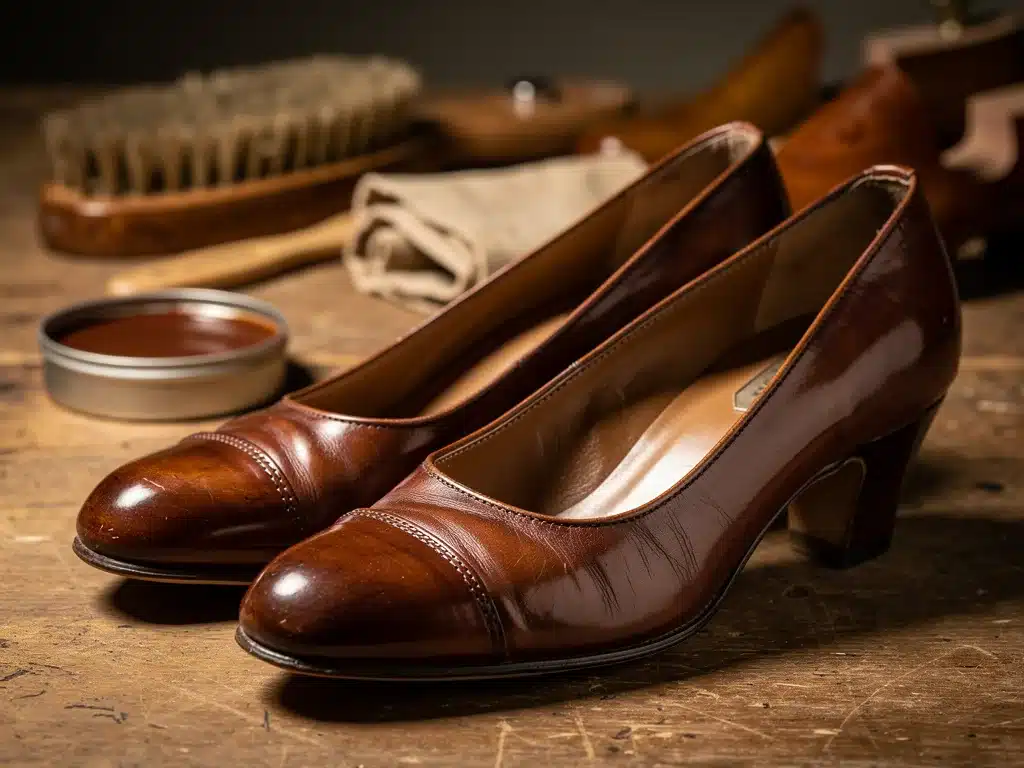
Vintage Footwear Restoration: A Guide to Preserving 1940s Leather Shoes explores the techniques used to protect aging leather and preserve historical footwear.
Proper restoration involves more than cleaning, requiring careful attention to materials, construction, and the condition of each pair.
This guide explains key preservation methods and practical steps for maintaining the appearance and integrity of vintage shoes.
Advertisements
The Enduring Appeal of 1940s Leather Footwear
The 1940s represented a pivotal era in fashion, marked by wartime austerity yet characterized by enduring elegance and robust construction in footwear.
Leather shoes from this period often feature distinctive designs, superior craftsmanship, and materials that, with proper care, can last for decades.
Their appeal lies not only in their aesthetic but also in their historical significance, offering a tangible connection to the past. Many collectors and enthusiasts seek out these pieces for their authenticity and the stories they tell.
Understanding the original construction and materials is the first step in any effective vintage footwear restoration project, ensuring that preservation efforts respect the shoe’s heritage.
Initial Assessment: Understanding the Condition and Materials
Before any restoration work begins, a thorough assessment of the shoe’s condition is paramount. This involves examining the leather type, stitching, sole integrity, and any existing damage such as cracks, scuffs, or mold.
Identifying the specific type of leather and its original finish is crucial, as this dictates the cleaning agents and conditioning treatments that will be most effective and least damaging.
A careful inspection helps formulate a tailored restoration plan.
This initial phase is critical for successful vintage footwear restoration, setting the foundation for all subsequent steps and preventing further deterioration.
Identifying Leather Types and Damage
- Calfskin and Kidskin: Common for their fine grain and flexibility, requiring gentle cleaning.
- Cordovan: Known for its durability and rich patina, often found in men’s dress shoes.
- Suede and Nubuck: Require specialized brushes and dry cleaning methods to prevent damage.
Damage assessment includes identifying deep cracks, which may require professional leather repair, and surface scuffs that can often be treated with conditioning and polishing. Mold and mildew demand immediate and careful attention to prevent spreading.
Gentle Cleaning Techniques for Aged Leather
Cleaning 1940s leather shoes requires a delicate touch, as aged leather can be brittle and susceptible to damage from harsh chemicals. The goal is to remove dirt and grime without stripping natural oils or causing discoloration.
Mild leather cleaners, often pH-neutral, are recommended, applied with a soft cloth or sponge. For stubborn dirt, a soft-bristled brush can be used, always working gently in small sections.
Thorough drying in a well-ventilated area, away from direct heat, is essential to prevent cracking and maintain the leather’s suppleness, a key aspect of effective vintage footwear restoration.
For heavily soiled areas, a specialized saddle soap designed for vintage leather can be effective, but it must be used sparingly and followed by proper conditioning. This prevents the leather from drying out excessively.
Restoring Moisture: Conditioning and Hydration
Aged leather often suffers from dryness and a loss of natural oils, leading to stiffness and cracking. Conditioning is a vital step in vintage footwear restoration, rehydrating the leather and restoring its flexibility.
High-quality leather conditioners, balms, or creams formulated for vintage or delicate leather should be applied evenly with a soft cloth. Allow the product to penetrate for several hours, or even overnight, before buffing.
This process not only improves the leather’s appearance but also strengthens its fibers, making it more resilient to future wear and tear, a critical component of long-term preservation.
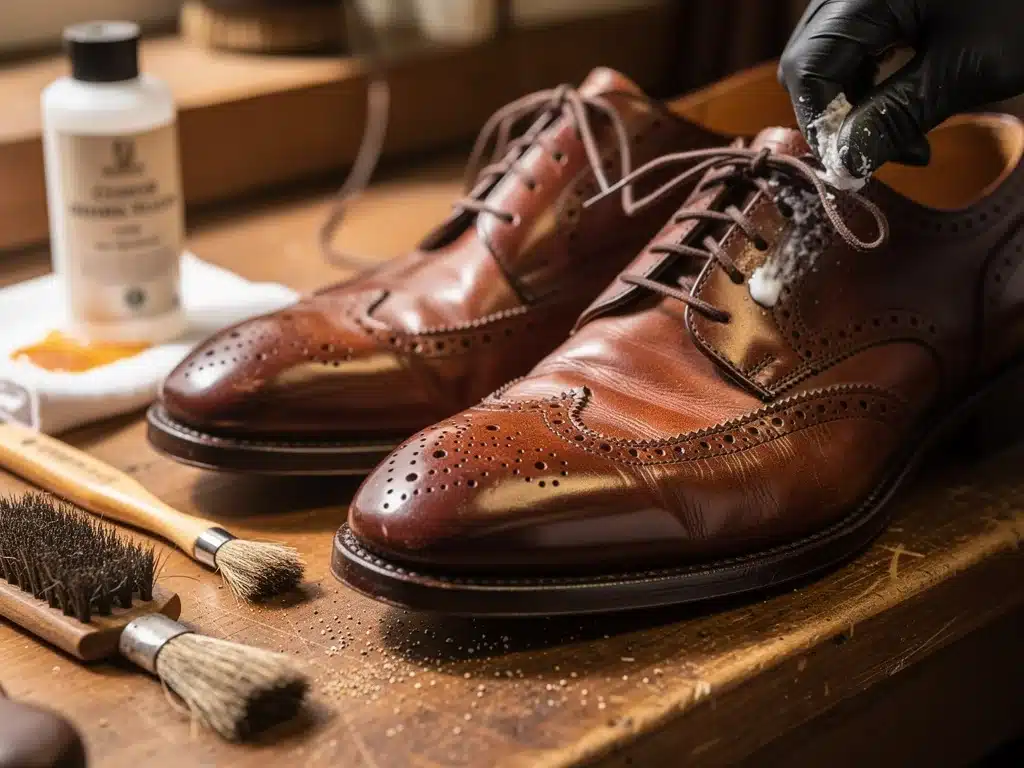
Repeat conditioning treatments can be necessary for severely dry shoes, gradually restoring the leather’s texture and sheen. Always test products on an inconspicuous area first to ensure compatibility and prevent adverse reactions.
Addressing Structural and Aesthetic Repairs
Beyond cleaning and conditioning, vintage footwear restoration often involves structural and aesthetic repairs. This can range from re-stitching loose seams to repairing cracked leather or replacing worn soles and heels.
Minor cracks can sometimes be filled with specialized leather fillers and then dyed to match the original color, blending seamlessly with the existing material. Professional cobblers often possess the expertise and tools for more complex repairs.
For soles and heels, finding period-appropriate materials and construction methods is crucial to maintaining the shoe’s historical accuracy and ensuring its continued wearability.
Common Repairs and Solutions
- Loose Stitching: Hand-stitching with strong, waxed thread to match original patterns.
- Cracked Leather: Using flexible leather fillers and careful dyeing for seamless integration.
- Worn Soles/Heels: Replacing with historically accurate materials and construction techniques.
When undertaking repairs, prioritize methods that are reversible or minimally invasive, preserving as much of the original material as possible. This approach respects the shoe’s authenticity and historical value.
Polishing and Finishing for a Period-Appropriate Shine
Once cleaned, conditioned, and repaired, the final step in vintage footwear restoration is polishing and finishing. This enhances the shoe’s appearance and provides a protective layer against environmental elements.
Use a high-quality shoe polish that matches the original color of the leather. For a truly authentic look, consider traditional wax polishes, which offer a deep luster and water resistance.
Apply polish in thin, even coats, buffing between applications with a soft brush or cloth until the desired shine is achieved. This not only makes the shoes look their best but also adds a crucial layer of protection.
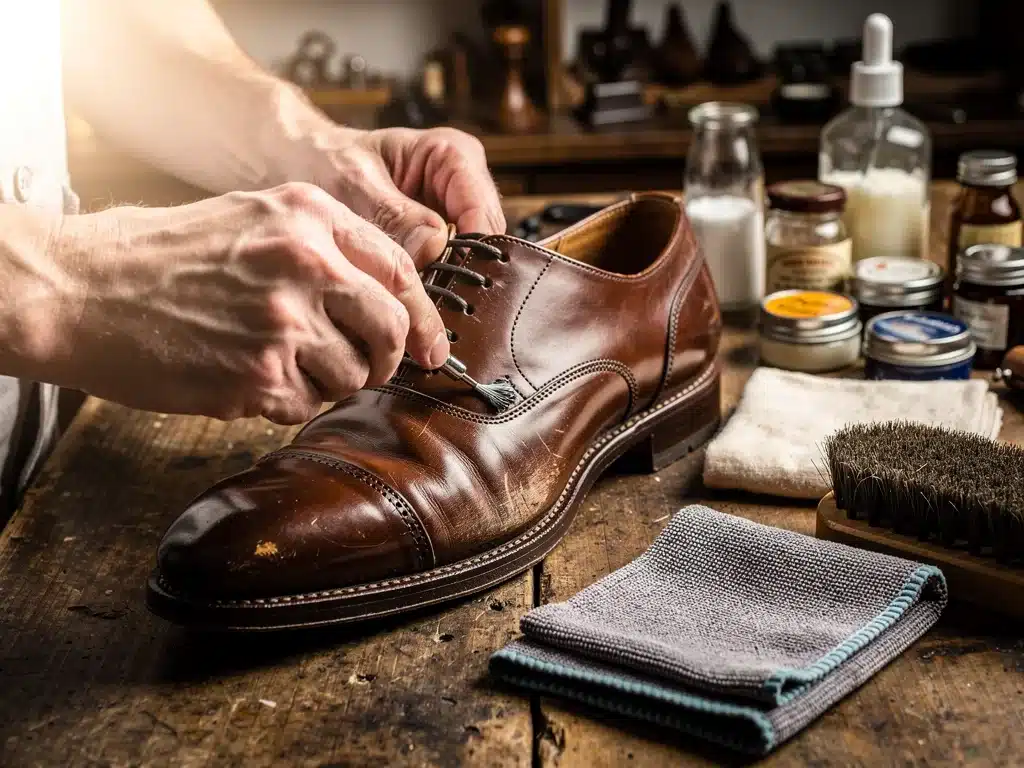
For shoes with a unique patina, a neutral polish can be used to preserve the existing color variations while still providing protection. Always ensure the leather is thoroughly dry before applying polish to prevent trapping moisture.
Long-Term Preservation and Storage
Effective vintage footwear restoration extends beyond the initial repair; it includes ongoing care and proper storage. To prevent future damage, store 1940s leather shoes in a cool, dry, and dark environment.
Using shoe trees made of cedar wood helps absorb moisture, maintain the shoe’s shape, and prevent creasing. Avoid plastic bags, which can trap humidity and encourage mold growth.
Regular inspections for any signs of deterioration, such as dryness or mold, allow for timely intervention and ensure the longevity of these valuable historical items.
Best Practices for Storage
- Cedar Shoe Trees: Essential for moisture absorption and shape retention.
- Breathable Storage: Use cotton bags or acid-free tissue paper, not plastic.
- Controlled Environment: Avoid extreme temperature fluctuations and high humidity.
Rotate shoes regularly if they are part of a larger collection, allowing them to air out and preventing prolonged pressure on specific areas. This proactive approach is key to successful vintage footwear restoration.
When to Seek Professional Restoration Services
While many aspects of vintage footwear restoration can be managed by enthusiasts, some situations necessitate professional intervention. Complex structural damage, extensive leather rot, or rare materials often require specialized expertise.
Professional restorers have access to advanced tools, techniques, and historical knowledge that can be critical for preserving delicate or highly valuable pieces. They can assess risks and perform repairs that maintain the shoe’s authenticity.
Consulting with an expert can prevent irreversible damage and ensure that the restoration process enhances, rather than diminishes, the shoe’s historical and monetary value.
It is always advisable to get multiple opinions from reputable restorers, especially for museum-quality pieces or shoes with significant sentimental value. Their guidance can prove invaluable in making informed decisions about the restoration approach.
| Key Aspect | Description |
|---|---|
| Initial Assessment | Crucial for identifying leather type and damage before restoration. |
| Cleaning & Conditioning | Gentle methods are vital to rehydrate and protect aged leather. |
| Repairs & Polishing | Addressing structural issues and applying period-appropriate finishes. |
| Long-Term Care | Proper storage and ongoing maintenance are essential for longevity. |
Frequently Asked Questions About Vintage Footwear Restoration
Common issues include dryness, cracking, scuffs, worn soles, and deteriorated stitching due to age and improper storage. Mold and mildew can also be a problem if shoes were stored in humid conditions. Addressing these early is key for successful vintage footwear restoration.
Not all shoes can be fully restored to their original condition, especially if the leather is severely degraded or brittle. However, most can be significantly improved and stabilized for display or occasional wear through careful vintage footwear restoration techniques. Professional assessment helps determine feasibility.
Use pH-neutral leather cleaners, balms, and conditioners specifically designed for delicate or vintage leather. Avoid harsh chemicals, alcohol-based products, or saddle soaps that are not formulated for aged materials. Always test products on an inconspicuous area first to ensure safety for vintage footwear restoration.
The frequency depends on the shoe’s condition and how often it’s handled or worn. Generally, conditioning every 6-12 months is sufficient for stored shoes. If worn, condition more frequently, perhaps every 3-4 months. Regular inspection will guide proper vintage footwear restoration.
For minor cleaning and conditioning, DIY is feasible. However, for significant structural damage, extensive leather repair, or highly valuable pieces, hiring a professional restorer is recommended. Their expertise ensures proper techniques and preserves the shoe’s historical integrity, crucial for vintage footwear restoration.
Perspectives on Vintage Footwear Preservation
The ongoing commitment to vintage footwear restoration reflects a growing appreciation for historical craftsmanship, longevity, and more sustainable fashion habits.
For readers interested in practical preservation methods, this guide on how to restore vintage shoes offers additional context on cleaning, conditioning, and reviving older footwear.
As interest in vintage pieces continues to grow, restoration skills may become increasingly valuable.
Preserving 1940s leather shoes helps extend their lifespan while maintaining the craftsmanship and design details that make them historically distinctive.